
|
You entered: rotation
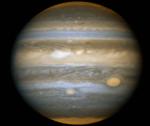 Jupiter and the Red Spots
5.05.2006
Jupiter's Great Red Spot is a swirling storm seen for over 300 years, since the beginning of telescopic observations. But in February 2006, planetary imager Christopher Go noticed it had been joined by Red Spot Jr - formed as smaller whitish oval-shaped storms merged and then developed the remarkable reddish hue.
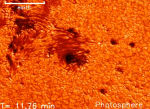 Orange Sun Oozing
6.11.2011
The Sun's surface keeps changing. The above movie shows how the Sun's surface oozes during a single hour. The Sun's photosphere has thousands of bumps called granules and usually a few dark depressions called sunspots.
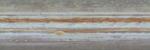 Jupiter Unpeeled
6.09.2003
Slice Jupiter from pole to pole, peel back its outer layers of clouds, stretch them onto a flat surface ... and for all your trouble you'd end up with something that looks a lot like this. Scrolling right will reveal the full picture, a color mosaic of Jupiter from the Cassini spacecraft.
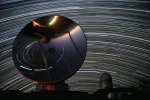 La Silla Star Trails North and South
2.02.2012
Fix your camera to a tripod and you can record graceful trails traced by the stars as planet Earth rotates on its axis. If the tripod is set up at ESO's La Silla Observatory, high in the Atacama desert of Chile, your star trails would look something like this.
 APOD: 2024 March 6 Б M102: Edge on Disk Galaxy
6.03.2024
What kind of celestial object is this? A relatively normal galaxy -- but seen from its edge. Many disk galaxies are actually just as thin as NGC 5866, the Spindle galaxy, pictured here, but are not seen edge-on from our vantage point. A perhaps more familiar galaxy seen edge-on is our own Milky Way galaxy.
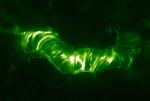 AR9077: Solar Magnetic Arcade
20.07.2000
On July 14th, solar active region 9077 (AR9077) produced a massive flare. The event also blasted an enormous cloud of energetic charged particles toward planet Earth, triggering magnetic storms and dramatic auroral displays. This striking close-up of AR9077 was made by the orbiting TRACE satellite shortly after the flare erupted.
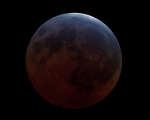 Full Moon in Earth's Shadow
8.04.2015
Last week the Full Moon was completely immersed in Earth's dark umbral shadow, just briefly though. The total phase of the April 4, 2015 lunar eclipse lasted less than 5 minutes, the shortest total lunar eclipse of the century.
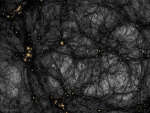 Dark Matter in a Simulated Universe
25.10.2020
Is our universe haunted? It might look that way on this dark matter map. The gravity of unseen dark matter is the leading explanation for why galaxies rotate so fast, why galaxies orbit clusters...
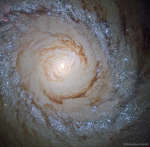 Starburst Galaxy M94 from Hubble
31.07.2022
Why does this galaxy have a ring of bright blue stars? Beautiful island universe Messier 94 lies a mere 15 million light-years distant in the northern constellation of the Hunting Dogs (Canes Venatici).
 APOD: 2024 May 15 Б AR 3664 at the Suns Edge
15.05.2024
What did the monster active region that created the recent auroras look like when at the Sun's edge? There, AR 3664 better showed its 3D structure. Pictured, a large multi-pronged solar prominence...
|
January February March April May June July August September |
|||||||||||||||||||||||||||||||||||||||||||||||||