
|
You entered: Earth
 Space Rock SQ222 Noticed After Pass
15.10.2003
Why didn't we see it? An undetected asteroid zipped past the Earth undetected last month in the closest near miss yet recorded -- within a quarter of the distance to the Moon. Such...
 Meteors Over Quebec
16.08.2010
Meteors streaked through the sky above many of Earth's cities last week, but nobody was hurt, and no damage has been reported. The assault from space appeared to originate from someplace in the constellation of Perseus, and included millions of small projectiles hurtling toward Earth at over 200,000 kilometers per hour.
 Dragon Aurora over Norway
10.04.2018
What's that in the sky? An aurora. A large coronal hole opened last month, a few days before this image was taken, throwing a cloud of fast moving electrons, protons, and ions toward the Earth.
 Dark Shuttle Approaching
3.08.2014
What's that approaching? Astronauts on board the International Space Station first saw it in early 2010 far in the distance. Soon it enlarged to become a dark silhouette. As it came even closer, the silhouette appeared to be a spaceship.
 Eros At Sunset
24.08.2000
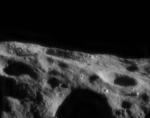
Gleaming in the rays of the setting sun, boulders litter the rugged surface of asteroid 433 Eros. The brightest boulder, at the edge of the large, shadowy crater near this picture's bottom center, is about 30 meters (100 feet) across.
 Sunrise Solstice at Stonehenge
21.06.2006
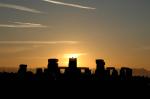
Today the Sun reaches its northernmost point in the planet Earth's sky. Called a solstice, the date traditionally marks a change of seasons -- from spring to summer in Earth's Northern Hemisphere and from fall to winter in Earth's Southern Hemisphere. Pictured above is the 2005 Summer Solstice celebration at Stonehenge in England.
 Two Million Stars on the Move
17.04.2017
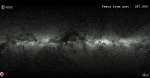
If you could watch the night sky for one million years -- how would it change? Besides local effects caused by the Earth's spin and the reorientation of the Earth's spin axis, the stars themselves will move.
 JWST on the Road to L2
31.12.2021
This timelapse gif tracks the James Webb Space Telescope as it streaks across the stars of Orion on its journey to a destination beyond the Moon. Recorded on December 28, 12 consecutive exposures each 10 minutes long were aligned and combined with a subsequent color image of the background stars to create the animation.
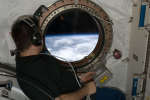 Home from Above
30.12.2008
There's no place like home. Peering out of the window of the International Space Station (ISS), astronaut Greg Chamitoff takes in the planet on which we were all born. About 350 kilometers up, the ISS is high enough so that the Earth's horizon appears clearly curved.
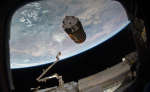 Japans Kounotori2 Supply Ship Approaches the Space Station
31.01.2011
The care package from Earth had arrived. Last week, Japan launched the robotic Kounotori2 spacecraft to bring needed supplies, including food, to the International Space Station (ISS). Kountori2 launched from Japan's Tanegashima Space Center a little over a week ago reached the ISS in low Earth late last week.
|
January February March April May June July August September October |
|||||||||||||||||||||||||||||||||||||||||||||||||