
|
You entered: Voyager
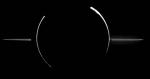 Jupiters Rings Revealed
9.01.2005
Why does Jupiter have rings? Jupiter's rings were discovered in 1979 by the passing Voyager 1 spacecraft, but their origin was a mystery. Data from the Galileo spacecraft that orbited Jupiter from 1995 to 2003 later confirmed that these rings were created by meteoroid impacts on small nearby moons.
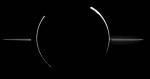 Jupiters Rings Revealed
16.06.2002
Why does Jupiter have rings? Jupiter's rings were discovered in 1979 by the passing Voyager 1 spacecraft, but their origin was a mystery. Data from the Galileo spacecraft currently orbiting Jupiter later confirmed that these rings were created by meteoroid impacts on small nearby moons.
 Shuttle Engine Blast
1.01.1996
The Space Shuttle Discovery's orbital maneuvering system (OMS) engine firing produced this dramatic flare as it cruised "upside down" in low Earth orbit. Discovery was named for a ship commanded by Captain James Cook RN, the 18th Century English astronomer and navigator.
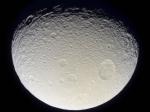 Saturns Moon Tethys from Cassini
29.11.2004
Tethys is one of the larger and closer moons of Saturn. The Cassini spacecraft now orbiting Saturn passed near the frozen moon at the end of October, capturing the most detailed images since the Voyager spacecrafts in the early 1980s.
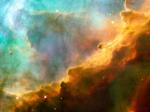 APOD: 2004 August 28- M17: A Hubble Close-Up
28.08.2004
Sculpted by stellar winds and radiation, these fantastic, undulating shapes lie within the stellar nursery known as M17, the Omega Nebula, some 5,500 light-years away in the nebula-rich constellation Sagittarius. The lumpy features...
 Dawn Launch Mosaic
29.09.2007
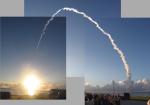
Shortly after sunrise on Thursday at Cape Canaveral Air Force Station, the Dawn spacecraft began its journey to the asteroid belt, arcing eastward into a blue and cloudy sky. Dawn's voyage began on a conventional, chemically fueled Delta II rocket, but will continue with an innovative ion propulsion system.
 Io: The Prometheus Plume
18.08.1997
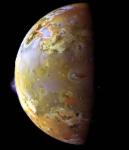
Two sulfurous eruptions are visible on Jupiter's volcanic moon Io in this color composite Galileo image. On the left, over Io's limb, a new bluish plume rises about 86 miles above the surface of a volcanic caldera known as Pillan Patera.
 Venus: Just Passing By
1.05.1998
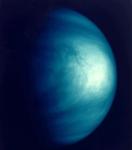
Venus, the second closest planet to the Sun, is a popular way-point for spacecraft headed for the gas giant planets in the outer reaches of the solar system. Why visit Venus first? Using...
 A Wind From The Sun
18.03.2000
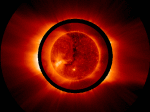
A wind from the Sun blows through our Solar System. The behaviour of comet tails as they flapped and waved in this interplanetary breeze gave astronomers the first hint of its existence. Streaming outward at 250-400 miles/second, electrons and ions boiling off the Sun's incredibly hot
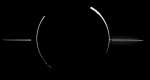 Jupiters Rings Revealed
17.06.2012
Why does Jupiter have rings? Jupiter's rings were discovered in 1979 by the passing Voyager 1 spacecraft, but their origin was a mystery. Data from the Galileo spacecraft that orbited Jupiter from 1995 to 2003 later confirmed that these rings were created by meteoroid impacts on small nearby moons.
|
January February March April May June July August September October |
|||||||||||||||||||||||||||||||||||||||||||||||||