
|
You entered: Sun
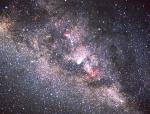 Comet Halley and the Milky Way
3.10.1997
Comet Halley was photographed superposed in front of the disk of our Milky Way Galaxy in 1986 by the Kuiper Airborne Observatory. Comet Halley is the bright white streak near this photograph's center. Comet Halley is the most famous comet in history, and returns to the inner Solar System every 76 years.
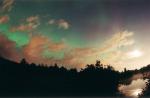 Aurora Over Clouds
10.09.2003
Aurorae usually occur high above the clouds. The auroral glow is created when fast-moving particles ejected from the Sun impact air molecules high in the Earth's atmosphere. An oxygen molecule, for example, will glow in a green light when reacquiring an electron lost during a collision with a solar particle.
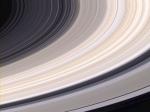 Saturns Rings in Natural Color
23.07.2004
What colors are Saturn's rings? Recent images from the Cassini spacecraft now orbiting Saturn confirm that different rings have slightly different colors. The above image shows their sometimes-subtle differences in brightness and color. The rings reflect sunlight and so, even if they were perfectly reflecting, would appear the color of the Sun.
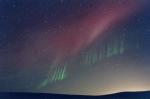 Rays from an Unexpected Aurora
20.11.2005
This aurora was a bit of a surprise. For starters, on this Friday morning in August 2002, no intense auroral activity was expected at all. Possibly more surprising, however, the aurora appeared to show an usual structure of green rays from some locations.
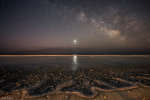 A View from the Zone
7.03.2014
Brilliant Venus and the central Milky Way rise in the early morning hours of March 1 in this sea and skyscape. The scene looks out from a beach at Sea Isle City, New Jersey, USA, planet Earth.
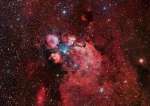 NGC 6334: The Cats Paw Nebula
18.06.2014
Nebulas are perhaps as famous for being identified with familiar shapes as perhaps cats are for getting into trouble. Still, no known cat could have created the vast Cat's Paw Nebula visible in Scorpius.
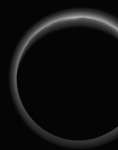 Pluto at Night
9.06.2016
The night side of Pluto spans this shadowy scene. The spacebased view with the Sun behind the distant world was captured by New Horizons last July. The spacecraft was at a range of over 21,000 kilometers, about 19 minutes after its closest approach.
 APOD: 2025 July 12 Б Clouds and the Golden Moon
12.07.2025
As the Sun set, a bright Full Moon rose on July 10. Its golden light illuminates clouds drifting through southern hemisphere skies in this well-composed telephoto image from Conceiццёo do Coitц, Bahia, Brazil. The brightest lunar phase is captured here with both a short and long exposure.
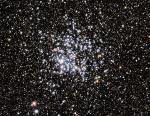 M11: The Wild Duck Cluster
22.01.2003
Many stars like our Sun were formed in open clusters. The above pictured open cluster, M11, contains thousands of stars and is just over five thousand light years distant. The stars in this cluster all formed together about 250 million years ago. The bright young stars in M11 appear blue.
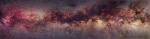 A Milky Way Band
5.06.2005
Most bright stars in our Milky Way Galaxy reside in a disk. Since our Sun also resides in this disk, these stars appear to us as a diffuse band that circles the sky.
|
January February |
|||||||||||||||||||||||||||||||||||||||||||||||||