
|
You entered: ESO
 Milky Way Rising
30.11.2023
The core of the Milky Way is rising beyond the Chilean mountain-top La Silla Observatory in this deep night skyscape. Seen toward the constellation Sagittarius, our home galaxy's center is flanked...
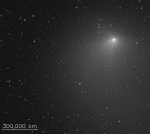 Comet Hale-Bopp Fades
17.09.1996
Comet Hale-Bopp has faded in the past few weeks. For Hale-Bopp, promised as the Great Comet of 1997, this was a bit of a disappointment -- but not entirely unexpected. Comet Hale-Bopp continues to approach...
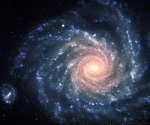 Grand Spiral Galaxy NGC 1232
25.12.2017
Galaxies are fascinating not only for what is visible, but for what is invisible. Grand spiral galaxy NGC 1232, captured in detail by one of the Very Large Telescopes, is a good example.
 APOD: 2025 June 24 Б In the Center of Spiral Galaxy M61
23.06.2025
Is there a spiral galaxy in the center of this spiral galaxy? Sort of. Image data from the Hubble Space Telescope, the European Southern Observatory, and smaller telescopes on planet Earth are combined in this detailed portrait of face-on spiral galaxy Messier 61 (M61) and its bright center.
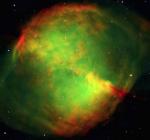 M27: Not A Comet
23.10.1999
While searching the skies above 18th century France for comets, astronomer Charles Messier diligently recorded this object as number 27 on his list of things which are definitely not comets. So what is it?
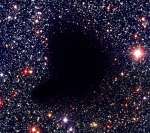 Molecular Cloud Barnard 68
13.12.2014
Where did all the stars go? What used to be considered a hole in the sky is now known to astronomers as a dark molecular cloud. Here, a high concentration of dust and molecular gas absorb practically all the visible light emitted from background stars.
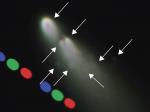 Crumbling Comet Schwassmann Wachmann 3 Approaches
26.04.2006
A crumbling comet will soon pass near the Earth. Comet 73P/Schwassmann-Wachmann 3 is brightening and may even be visible to the unaided eye when the fragmented comet zooms past Earth during the middle of next month.
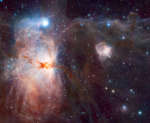 The Flame Nebula in Infrared
11.01.2010
What lights up the Flame Nebula? Fifteen hundred light years away towards the constellation of Orion lies a nebula which, from its glow and dark dust lanes, appears, on the left, like a billowing fire. But fire, the rapid acquisition of oxygen, is not what makes this Flame glow.
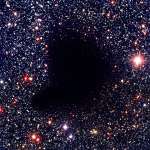 Molecular Cloud Barnard 68
23.06.2009
Where did all the stars go? What used to be considered a hole in the sky is now known to astronomers as a dark molecular cloud. Here, a high concentration of dust and molecular gas absorb practically all the visible light emitted from background stars.
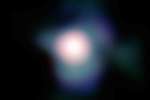 Betelgeuse Resolved
5.08.2009
The sharpest image ever of Betelgeuse shows a mammoth star that is slowly evaporating. Betelgeuse (sounds a lot like "beetle juice"), also known as Alpha Orionis, is one of the largest and brightest stars known. The star is a familiar orange fixture easily visible to the unaided eye toward the constellation of Orion.
|
January February March April May June July August September |
|||||||||||||||||||||||||||||||||||||||||||||||||