
|
You entered: ESO
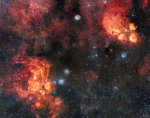 NGC 6357: The Lobster Nebula
6.02.2017
Why is the Lobster Nebula forming some of the most massive stars known? No one is yet sure. Near the more obvious Cat's Paw nebula on the upper right, the Lobster Nebula...
 Total Solar Eclipse Below the Bottom of the World
4.12.2021
Yesterday there was a total solar eclipse visible only at the end of the Earth. To capture the unusual phenomenon, airplanes took flight below the clouded seascape of Southern Ocean. The featured image shows...
 APOD: 2024 November 24 Б Journey to the Center of the Galaxy
23.11.2024
What lies at the center of our galaxy? In Jules Verne's science fiction classic, A Journey to the Center of the Earth, Professor Liedenbrock and his fellow explorers encounter many strange and exciting wonders.
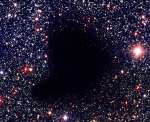 Molecular Cloud Barnard 68
29.01.2012
Where did all the stars go? What used to be considered a hole in the sky is now known to astronomers as a dark molecular cloud. Here, a high concentration of dust and molecular gas absorb practically all the visible light emitted from background stars.
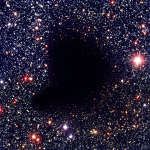 Dark Molecular Cloud Barnard 68
7.10.2017
Where did all the stars go? What used to be considered a hole in the sky is now known to astronomers as a dark molecular cloud. Here, a high concentration of dust and molecular gas absorb practically all the visible light emitted from background stars.
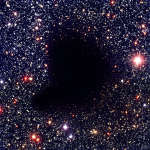 Dark Molecular Cloud Barnard 68
21.11.2020
Where did all the stars go? What used to be considered a hole in the sky is now known to astronomers as a dark molecular cloud. Here, a high concentration of dust and molecular gas absorb practically all the visible light emitted from background stars.
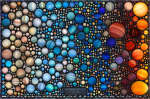 APOD: 2024 July 8 Б Exoplanet Zoo: Other Stars
7.07.2024
Do other stars have planets like our Sun? Surely they do, and evidence includes slight star wobbles created by the gravity of orbiting exoplanets and slight star dimmings caused by orbiting planets moving in front.
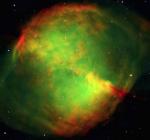 M27: Not A Comet
9.10.1998
While searching the skies above 18th century France for comets, astronomer Charles Messier diligently recorded this object as number 27 on his list of things which are definitely not comets. So what is it?
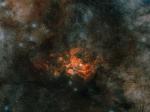 Star Forming Region NGC 6357
19.12.2006
For reasons unknown, NGC 6357 is forming some of the most massive stars ever discovered. Near the more obvious Cat's Paw nebula, NGC 6357 houses the open star cluster Pismis 24, home to these tremendously bright and blue stars.
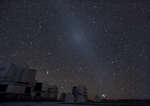 The Gegenschein Over Chile
2.12.2012
Is the night sky darkest in the direction opposite the Sun? No. In fact, a rarely discernable faint glow known as the gegenschein (German for "counter glow") can be seen 180 degrees around from the Sun in an extremely dark sky. The gegenschein is sunlight back-scattered off small interplanetary dust particles.
|
January February March April May June July August September |
|||||||||||||||||||||||||||||||||||||||||||||||||