
|
You entered: sky
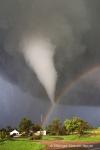 Tornado and Rainbow Over Kansas
2.07.2006
The scene might have been considered serene if it weren't for the tornado. Last June in Kansas, storm chaser Eric Nguyen photographed this budding twister in a different light -- the light of a rainbow. Pictured above, a white tornado cloud descends from a dark storm cloud.
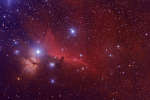 Orion s Horsehead Nebula
21.02.2008
The Horsehead Nebula is one of the most famous nebulae on the sky. It is visible as the dark indentation to the red emission nebula seen just below and left of center in the this photograph. The brightest star on the left is located in the belt of the familiar constellation Orion.
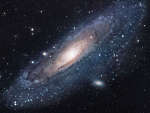 M31: The Andromeda Galaxy
10.05.2009
Andromeda is the nearest major galaxy to our own Milky Way Galaxy. Our Galaxy is thought to look much like Andromeda. Together these two galaxies dominate the Local Group of galaxies. The diffuse light from Andromeda is caused by the hundreds of billions of stars that compose it.
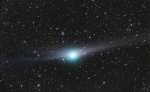 Another Tail for Comet Garradd
3.03.2012
Remarkable comet Garradd (C2009/P1) has come to be known for two distinctive tails. From the perspective of earthbound comet watchers the tails are visible on opposite sides of its greenish coma. Seen here in a telescopic view, the recognizable dust tail fans out to the right, trailing the comet nucleus in its orbit.
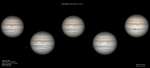 Jupiter and Io
28.11.2012
On December 3 (UT), Jupiter, the solar system's largest planet, will be at opposition, opposite the Sun in planet Earth's sky, shining brightly and rising as the Sun sets. That configuration results in Jupiter's almost annual closest approach to planet Earth.
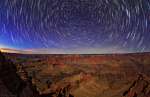 Grand Canyon Star Trails
3.03.2013
One of the natural wonders of planet Earth, the Grand Canyon in the American southwest stretches across this early evening skyscape. The digitally stacked sequence reveals the canyon's layers of sedimentary rock in bright moonlight.
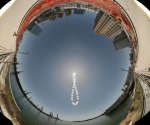 High Noon Analemma Over Azerbaijan
14.10.2013
Is the Sun always straight up at noontime? No. For example, the Sun never appears directly overhead from locations well north or south of the Earth's equator. Conversely, there is always a place on Earth where the Sun will appear at zenith at noon -- for example on the equator during an equinox.
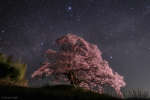 Summer Triangles over Japan
6.05.2015
Have you ever seen the Summer Triangle? The bright stars Vega, Deneb, and Altair form a large triangle on the sky that can be seen rising in the early northern early spring during the morning and rising in the northern fall during the evening.
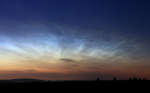 Noctilucent Clouds Tour France
9.07.2016
Bright noctilucent or night shining clouds are not familiar sights from northern France. But these electric-blue waves coursed through skies over the small town of Wancourt in Pas-de-Calais on July 6, just before the dawn.
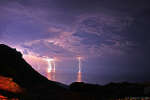 Lightning Eclipse from the Planet of the Goats
16.07.2017
Thunderstorms almost spoiled this view of the spectacular 2011 June 15 total lunar eclipse. Instead, storm clouds parted for 10 minutes during the total eclipse phase and lightning bolts contributed to the dramatic sky.
|
January February March April May June July August September October |
|||||||||||||||||||||||||||||||||||||||||||||||||