
|
You entered: origin
 APOD: 2023 October 31 Б Halloween and the Wizard Nebula
31.10.2023
Halloween's origin is ancient and astronomical. Since the fifth century BC, Halloween has been celebrated as a cross-quarter day, a day halfway between an equinox (equal day / equal night) and a solstice (minimum day / maximum night in the northern hemisphere).
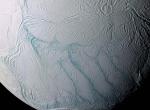 Enceladus and the Search for Water
10.03.2006
Based on data from Cassini spacecraft instruments, researchers are now arguing that liquid water reservoirs exist only tens of meters below the surface of Saturn's small (500 kilometer diameter) but active moon Enceladus. The exciting new results center around towering jets and plumes of material erupting from the moon's surface.
 Strange Orange Soil on the Moon
23.05.2001
How did orange soil appear on the Moon? This mystery began when astronaut Harrison Schmidt noticed the off-color patch near Apollo 17's Taurus-Littrow landing site in 1972. Schmidt and fellow astronaut Eugene Cernan scooped up some of the unusual orange soil for detailed inspection back on Earth.
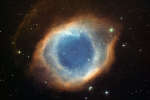 The Helix Nebula from La Silla Observatory
3.03.2009
Will our Sun look like this one day? The Helix Nebula is one of brightest and closest examples of a planetary nebula, a gas cloud created at the end of the life of a Sun-like star.
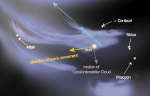 The Local Fluff
29.08.2010
The stars are not alone. In the disk of our Milky Way Galaxy about 10 percent of visible matter is in the form of gas, called the interstellar medium (ISM). The ISM is not uniform, and shows patchiness even near our Sun.
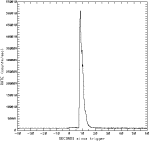 BATSE's Biggest Gamma Ray Burst (Yet)
1.10.1996
Something big exploded but astronomers have no idea what. On September 24th, the Burst and Transient Source Experiment (BATSE) onboard the orbiting Compton Gamma Ray Observatory recorded the most intense gamma ray burst in its five year history.
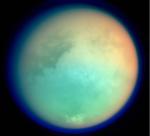 Tantalizing Titan
28.10.2004
Normally hidden by a thick, hazy atmosphere, tantalizing features on Titan's surface appear in this false-color view. The image was recorded as the Cassini spacecraft approached its first close flyby of Saturn's smog-shrouded moon on October 26.
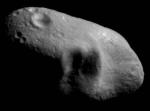 NEAR Shoemaker Views Eros
16.03.2000
Orbiting asteroid 433 Eros, 145 million miles from Earth, NASA's NEAR spacecraft has been returning stunning views as its year long mission of exploration gets underway. A mosaic of recent NEAR images recorded...
 Kaguya Spacecraft Crashes into the Moon
29.06.2009
Japan's Kaguya spacecraft crashed into the Moon last week, as planned. Officially named the Selenological and Engineering Explorer (SELENE), the spacecraft was given the nickname Kaguya after the princess in the Japanese folklore story The Tale of the Bamboo Cutter.
 Rosetta Approaches Asteroid Lutitea
24.04.2012
What would it look like to approach an asteroid in a spaceship? In 2010, ESA's robotic Rosetta spacecraft zipped past the asteroid 21 Lutetia taking data and snapping images in an effort to better determine the history of the asteroid and the origin of its unusual colors.
|
January February March April May June July August |
||||||||||||||||||||||||||||||||||||||||||||||||||||||||