
|
You entered: sky
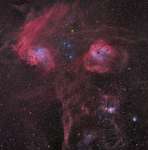 Aurigae Nebulae
24.02.2012
Rich in star clusters and nebulae, the ancient constellation of Auriga, the Charioteer, rides high in northern winter night skies. Composed from narrow and broadband filter data and spanning nearly 8 Full Moons (4 degrees) on the sky, this deep telescopic view recorded in January shows off some of Auriga's celestial bounty.
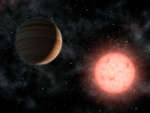 VB 10: A Large Planet Orbiting a Small Star
3.06.2009
Can a planet be as large as the star that it orbits? Recent observations have discovered that nearby Van Biesbroeck's star might have just such a large planet. Although VB 10 lies only...
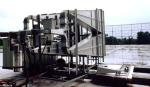 Radio, The Big Ear, And The Wow! Signal
17.09.1998
Since the early days of radio and television we have been freely broadcasting signals into space. For some time now, we have been listening too. Ohio State University's radio telescope, affectionately known as "The Big Ear" , was one of the first and largest listeners.
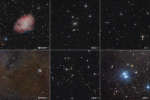 Catalog Entry Number 1
14.03.2018
Every journey has first step and every catalog a first entry. First entries in six well-known deep sky catalogs appear in these panels, from upper left to lower right in chronological order of original catalog publication.
 Tycho s Supernova Remnant
30.04.2011
Tycho! Tycho! burning bright In the darkness of the night, What exploding white dwarf star Did frame thy remnant from afar, In the distant deep dark skies Under gaze of human eyes? Seen by mortals and their ma Named for one called Tycho Brahe.
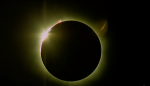 Cheering a Total Solar Eclipse
14.03.2016
What would you do if you saw the Sun disappear? Quite possibly: cheer. That's what many exuberant sky watchers did across Indonesia during a total eclipse of the Sun last week. There and then, the land and sky went dark during the day as our Sun disappeared for a few minutes behind our Moon.
 A Total Lunar Eclipse Over Tajikistan
5.10.2014
If the full Moon suddenly faded, what would you see? The answer during the total lunar eclipse of 2011 June was recorded in a dramatic time lapse video from Tajikistan. During a total lunar eclipse, the Earth moves between the Moon and the Sun, causing the moon to fade dramatically.
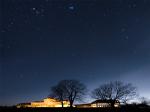 Mira Over Germany
20.02.2007
What's that new star in the sky? The star might appear new, but it's actually just the variable star Mira near its brightest. Rolling your cursor over the above vertically compressed image...
 A Total Lunar Eclipse Over Tajikistan
27.01.2018
If the full Moon suddenly faded, what would you see? The answer during the total lunar eclipse in 2011 was recorded in a dramatic time lapse video from Tajikistan. During a total lunar eclipse, the Earth moves between the Moon and the Sun, causing the moon to fade dramatically.
 Earth Nears Asteroid Toutatis
1.10.2004
On Wednesday, September 29, the Earth came within one million miles of the asteroid Toutatis -- the closest predicted aproach of our fair planet to a sizable asteroid or comet in this century. Coming within...
|
January February March April May June July August September October |
|||||||||||||||||||||||||||||||||||||||||||||||||