
|
You entered: orbit
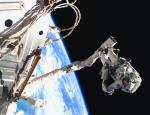 Astronaut at Work
30.05.2004
Did you ever have a day where everything got turned around and you just couldn't tell which way was up? Fortunately, this didn't happen to astronaut James S. Voss on 2000 May 21, who spent six hours preparing to fix and upgrade the International Space Station.
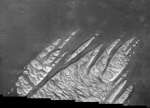 White Rock Fingers on Mars
30.10.2011
What caused this unusual light rock formation on Mars? Intrigued by the possibility that they could be lakebed dried-up, detailed studies of these fingers now indicate a more mundane possibility: volcanic ash. Studying the exact color of the formation indicated the possible volcanic origin.
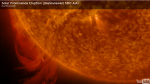 A Huge Solar Filament Erupts
31.07.2016
Filaments sometimes explode off the Sun. Featured, a huge filament had been seen hovering over the Sun's surface for over a week before it erupted late in 2010. The image sequence was taken by the Earth-orbiting Solar Dynamics Observatory (SDO) in one color of ultraviolet light.
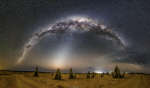 Milky Way and Zodiacal Light over Australian Pinnacles
10.10.2017
What strange world is this? Earth. In the foreground of the featured image are the Pinnacles, unusual rock spires in Nambung National Park in Western Australia. Made of ancient sea shells (limestone), how these human-sized picturesque spires formed remains a topic of research. The panorama was taken last month.
 Earth at Night
13.02.2022
This is what the Earth looks like at night. Can you find your favorite country or city? Surprisingly, city lights make this task quite possible. Human-made lights highlight particularly developed or populated areas of the Earth's surface, including the seaboards of Europe, the eastern United States, and Japan.
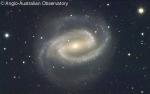 Barred Spiral Galaxy NGC 1300
4.10.2000
NGC 1300 is a large spiral galaxy that appears as a flattened figure eight. A huge bar that spans over 150,000 light-years across the galaxy center dominates its appearance. The picturesque galaxy lies about 75 million light-years distant, so that light that we see now left during the age of the dinosaurs.
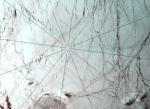 North Pole Below
20.10.2000
Orbiting over the north pole of planet Earth on May 5, the MODIS instrument on-board the Terra spacecraft, recorded this view of the ice cap 700 kilometers below. A radial grid centered on the pole is shown on top of the approximately true color image where each pixel covers about one square kilometer.
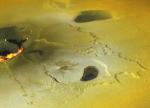 A Continuous Eruption on Jupiters Moon Io
6.06.2000
A volcano on Jupiter's moon Io has been photographed recently during an ongoing eruption. Hot glowing lava is visible on the left on this representative-color image. A glowing landscape of plateaus and valleys covered in sulfur and silicate rock surrounds the active volcano.
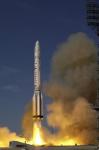 A Russian Proton Rocket Launches Zvezda
18.07.2000
The Russian Proton rocket is the tallest rocket in routine use. First deployed in 1965, the rocket stands typically 40 meters tall, can carry unusually heavy payloads into space, and maintains a high record of reliability.
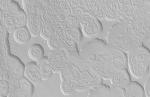 Swiss Cheese Like Landscape on Mars
27.03.2001
Why do parts of the south pole of Mars look like swiss cheese? This little-understood landscape features flat-topped mesas nearly 4 meters high and circular indentations over 100 meters across. Since this swiss-cheese topography...
|
January February March April May June July August September |
|||||||||||||||||||||||||||||||||||||||||||||||||