
|
You entered: Sun
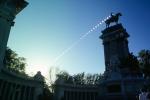 Eclipse Madrid
7.10.2005
A walk in the park seemed like a perfect idea to many enjoying a sunny October morning in Madrid, Spain. Of course, on October 3rd an added attraction was the Moon - seen in dramatic silhouette during an annular solar eclipse.
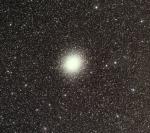 Omega Centauri
26.05.2006
Centaurus, the Centaur, is one of the most striking constellations in the southern sky. The Milky Way flows through this celestial expanse whose wonders also include the closest star to the sun, Alpha Centauri, and the largest globular star cluster in our galaxy, Omega Centauri.
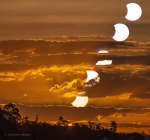 Brisbane Sunset Moonset
1.05.2014
In skies over Brisbane at the southeastern corner of Queensland, Australia, Planet Earth, the Sun and New Moon set together on April 29. There the celestial line-up, the first solar eclipse of 2014, was seen as a partial solar eclipse.
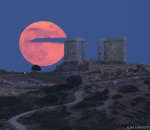 Strawberry Moon over the Temple of Poseidon
17.06.2019
Did you see the full moon last night? If not, tonight's nearly full moon should be almost as good. Because full moons are opposite the Sun, they are visible in the sky when the Sun is not -- which should be nearly all night long tonight, clouds permitting.
 8 Minute and 30 Second Eclipse
5.07.2019
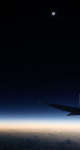
The total phase of the July 2nd solar eclipse lasted about 4 minutes and 30 seconds at the point of maximum eclipse. On the surface of planet Earth, that was about 600 nautical miles north of Easter Island in the Southern Pacific Ocean.
 APOD: 2025 February 4 Б Anticrepuscular Rays: A Rainbow Fan over Spain
3.02.2025
Yes, but can your rainbow do this? Late in the day, the Sun set as usual toward the west. However, on this day, the more interesting display was 180 degrees around -- toward the east. There, not only was a rainbow visible, but an impressive display of anticrepuscular rays from the rainbow's center.
 COBE Dipole: Speeding Through the Universe
8.02.2003
Our Earth is not at rest. The Earth moves around the Sun. The Sun orbits the center of the Milky Way Galaxy. The Milky Way Galaxy orbits in the Local Group of Galaxies. The Local Group falls toward the Virgo Cluster of Galaxies.
 Light from the First Stars
1.01.2007
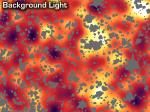
What were the first stars like? No one is yet sure. Our Sun is not a first-generation star. It is not even second generation. The first stars to appear in the universe likely came and went about 13 billion years ago.
 Eclipse over the Great Wall
31.08.2008
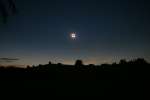
Contrary to the famous myth, you can't see the Great Wall of China from the Moon ... even during a total solar eclipse. But on August 1 you could see the Moon eclipsing the Sun from the Great Wall.
 Annular Eclipse Over Myanmar
25.01.2010
A hole crossed the Sun for a few minutes this month, as seen across a thin swath of planet Earth. The event on January 15 was actually an annular solar eclipse, and the hole was really Earth's Moon, an object whose dark half may appear even darker when compared to the tremendously bright Sun.
|
January February March April May June July August September |
|||||||||||||||||||||||||||||||||||||||||||||||||