
|
You entered: orbit
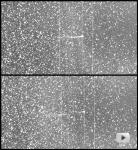 Comet Encke s Tail Ripped off
3.10.2007
Swinging inside the orbit of Mercury, on April 20th periodic comet Encke encountered a blast from the Sun in the form of a Coronal Mass Ejection (CME). When CMEs, enormous clouds of energetic particles ejected from the Sun, slam into Earth's magnetosphere, they often trigger auroral displays.
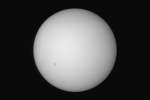 The International Space Station Transits the Sun
30.07.2008
That's no sunspot. It's the International Space Station (ISS) caught by chance passing in front of the Sun. Sunspots, individually, have a dark central umbra, a lighter surrounding penumbra, and no solar panels.
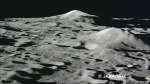 Kaguya Spacecraft Crashes into the Moon
29.06.2009
Japan's Kaguya spacecraft crashed into the Moon last week, as planned. Officially named the Selenological and Engineering Explorer (SELENE), the spacecraft was given the nickname Kaguya after the princess in the Japanese folklore story The Tale of the Bamboo Cutter.
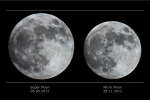 Super Moon vs Micro Moon
29.11.2012
Did you see the big, bright, beautiful Full Moon Wednesday night? That was actually a Micro Moon! On that night, the smallest Full Moon of 2012 reached its full phase only about 4 hours before apogee, the most distant point from Earth in the Moon's elliptical orbit.
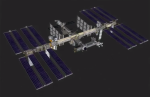 Assembly of The International Space Station
9.11.2015
It is the largest and most sophisticated object ever built off the Earth. It has taken numerous spaceflights and over a decade to construct. The International Space Station (ISS) is currently the premiere habitat...
 Perijove Passage
3.06.2017
On May 19, the Juno spacecraft once again swung by Jupiter in its looping 53 day orbit around the Solar System's ruling gas gaint. Beginning at the top, this vertical 14 frame sequence of enhanced-color JunoCam images follows the spacecraft's rapidly changing perspective during its two hour passage.
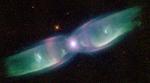 M2 9: Wings of a Butterfly Nebula
17.12.2000
Are stars better appreciated for their art after they die? Actually, stars usually create their most artistic displays as they die. In the case of low-mass stars like our Sun and M2-9 pictured above
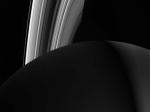 Saturn at Night
12.09.2006
This is what Saturn looks like at night. In contrast to the human-made lights that cause the nighttime side of Earth to glow faintly, Saturn's faint nighttime glow is primarily caused by sunlight reflecting off of its own majestic rings.
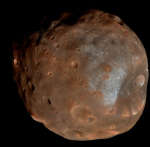 Phobos: Doomed Moon of Mars
14.04.2008
This moon is doomed. Mars, the red planet named for the Roman god of war, has two tiny moons, Phobos and Deimos, whose names are derived from the Greek for Fear and Panic. These...
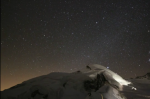 Geostationary Satellites Beyond the Alps
11.04.2012
Why don't those stars move? Stars in the sky will typically appear to rise and set as the Earth turns. Those far to the north or south will appear to circle the pole. If you look closely at the above time-lapse movie, however, there are points of light that appear stationary.
|
January February March April May June July August September |
|||||||||||||||||||||||||||||||||||||||||||||||||