
|
You entered: ancient
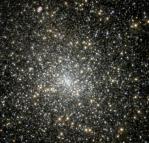 M15: Dense Globular Star Cluster
4.08.2000
Life might get dull at the core of M15 but the sky would always be bright with stars! In fact, only 40,000 light-years away in the constellation Pegasus, M15 is one of the most densely packed globular star clusters in our Milky Way Galaxy.
 Flying Over the Columbia Hills of Mars
19.05.2008
What it would be like to fly over Mars? Combining terrain data from the orbiting Mars Global Surveyor spacecraft (now dormant) with information about the robotic Spirit rover currently rolling across Mars has resulted in a digital movie that shows what a flight over the Columbia Hills might look like.
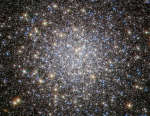 Hubble s Messier 5
4.11.2017
"Beautiful Nebula discovered between the Balance [Libra] & the Serpent [Serpens] ..." begins the description of the 5th entry in 18th century astronomer Charles Messier's famous catalog of nebulae and star clusters. Though it appeared...
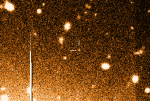 The Farthest Explosion Yet Measured
19.10.2000
It happened so far away that common human distance measures are inadequate to describe it. Furthermore, astronomers do not even claim to know exactly what happened. What is known is that satellites across our Solar System reported on 2000 January 31 a tremendous explosion of gamma rays had occurred towards some previously uninteresting direction.
 Stars and Dust Across Corona Australis
12.09.2013
Cosmic dust clouds sprawl across a rich field of stars in this sweeping telescopic vista near the northern boundary of Corona Australis, the Southern Crown. Less than 500 light-years away the dust clouds effectively block light from more distant background stars in the Milky Way.
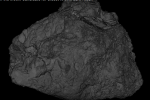 Found on the Moon: Candidate for Oldest Known Earth Rock
3.02.2021
Was the oldest known rock on Earth found on the Moon? Quite possibly. The story opens with the Apollo 14 lunar mission. Lunar sample 14321, a large rock found in Cone crater by astronaut...
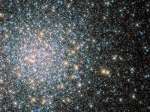 Hubble s Messier 5
25.04.2014
"Beautiful Nebula discovered between the Balance [Libra] & the Serpent [Serpens] ..." begins the description of the 5th entry in 18th century astronomer Charles Messier's famous catalog of nebulae and star clusters. Though it appeared...
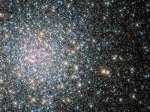 Hubble s Messier 5
20.06.2015
"Beautiful Nebula discovered between the Balance [Libra] & the Serpent [Serpens] ..." begins the description of the 5th entry in 18th century astronomer Charles Messier's famous catalog of nebulae and star clusters. Though it appeared...
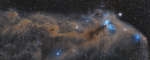 Across Corona Australis
29.11.2018
Cosmic dust clouds are draped across a rich field of stars in this broad telescopic panorama near the northern boundary of Corona Australis, the Southern Crown. Less than 500 light-years away the denser clouds effectively block light from more distant background stars in the Milky Way.
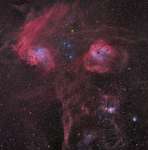 Aurigae Nebulae
24.02.2012
Rich in star clusters and nebulae, the ancient constellation of Auriga, the Charioteer, rides high in northern winter night skies. Composed from narrow and broadband filter data and spanning nearly 8 Full Moons (4 degrees) on the sky, this deep telescopic view recorded in January shows off some of Auriga's celestial bounty.
|
January February March April May June July August September |
|||||||||||||||||||||||||||||||||||||||||||||||||