
|
You entered: image
 NGC 604: Giant Stellar Nursery
24.04.2024
Located some 3 million light-years away in the arms of nearby spiral galaxy M33, giant stellar nursery NGC 604 is about 1,300 light-years across. That's nearly 100 times the size of the Milky Way's Orion Nebula, the closest large star forming region to planet Earth.
 APOD: 2024 July 7 Б Iridescent Clouds over Sweden
6.07.2024
Why are these clouds multi-colored? A relatively rare phenomenon in clouds known as iridescence can bring up unusual colors vividly -- or even a whole spectrum of colors simultaneously. These polar stratospheric clouds also, known as nacreous and mother-of-pearl clouds, are formed of small water droplets of nearly uniform size.
 APOD: 2025 November 26 Б Globular Cluster M15 Deep Field
25.11.2025
Stars, like bees, swarm around the center of bright globular cluster M15. The central ball of over 100,000 stars is a relic from the early years of our Galaxy, and continues to orbit the Milky Way's center.
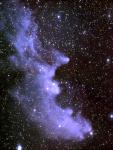 The Witch Head Nebula
26.02.2001
Double, double toil and trouble; Fire burn, and cauldron bubble -- maybe Macbeth should have consulted the Witch Head Nebula. This suggestively shaped reflection nebula is associated with the bright star Rigel in the constellation Orion.
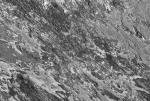 Up Close to Jupiter's Moon Io
7.06.2000
Above is the highest resolution photograph yet taken of the Solar System's strangest moon. The surface of Jupiter's moon Io is home to violent volcanoes that are so active they turn the entire moon inside out. The above photograph shows a region four kilometers across and resolves features only five meters across.
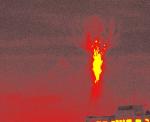 Burning Tree Sprite
2.08.2001
This dramatic, garishly colored image was captured with a low-light level camera on 2001 June 7. It shows what appears to be a "burning tree" above the National Cheng Kung University campus in Tainan City, Taiwan ... but the burning tree is actually a fleeting red sprite 300 kilometers away.
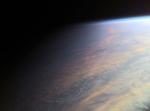 Earth at Twilight
24.04.2003
No sudden, sharp boundary marks the passage of day into night in this gorgeous view of ocean and clouds over our fair planet Earth. Instead, the shadow line or terminator is diffuse and shows the gradual transition to darkness we experience as twilight.
 The Sun Puffs
11.04.1997
The Earth has once again endured a burst of particles from the Sun. The latest storm, which began Monday, was one of the best documented solar storms to date. At 10 am (EDT) ground...
 The Lyman Alpha Forest
23.02.1998
We live in a forest. Strewn throughout the universe are "trees" of hydrogen gas that absorb light from distant objects. These gas clouds leave numerous absorption lines in a distant quasar's spectra, together called the Lyman-alpha forest.
 The Radio Sky: Tuned to 408MHz
4.02.2005
Tune your radio telescope to 408MHz (408 million cycles per second) and check out the Radio Sky! In the 1970s large dish antennas at three radio observatories, Jodrell Bank, MPIfR, and Parkes Observatory, were used to do just that - the data were combined to map the entire sky.
|
January February March April May June July August September |
|||||||||||||||||||||||||||||||||||||||||||||||||