
|
You entered: Orion
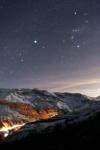 Alborz Mountains in Moonlight
2.02.2007
On January 25th, light from a first quarter Moon illuminated this dreamlike landscape looking across the rugged, snow-covered peaks of the Alborz Mountain Range in northern Iran. The stunning sky is filled with stars, including the yellow-tinged Betelgeuse at the shoulder of Orion.
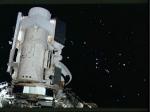 Astro 1 In Orbit
19.02.1999
In December of 1990, the Space Shuttle Columbia carried an array of astronomical telescopes high above the Earth's obscuring atmosphere to observe the Universe at ultraviolet and x-ray wavelengths. The telescopes, known...
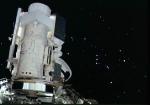 Astro 1 In Orbit
17.08.1997
In December of 1990, the Space Shuttle Columbia carried an array of astronomical telescopes high above the Earth's obscuring atmosphere to observe the Universe at ultraviolet and x-ray wavelengths. The telescopes, known...
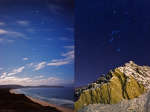 Scenes from Two Hemispheres
14.01.2010
The stars of a summer night on the left and the winter night sky on the right are the same stars. In fact, both pictures were taken in late December and have similar fields of view.
 Astro 1 In Orbit
4.05.1996
In December of 1990, the Space Shuttle Columbia carried an array of astronomical telescopes high above the Earth's obscuring atmosphere to observe the Universe at ultraviolet and x-ray wavelengths. The telescopes, known...
 Cabin Under the Stars
16.01.2019
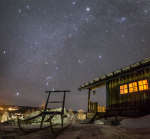
Gocka's, a family nickname for the mountain cabin, and a wooden sled from a generation past stand quietly under the stars. The single exposure image was taken on January 6 from Tanndalen Sweden to evoke a simple visual experience of the dark mountain skies.
 Astro 1 In Orbit
2.12.2005
Fifteen years ago, in December of 1990, the Space Shuttle Orbiter Columbia carried an array of astronomical telescopes high above the Earth's obscuring atmosphere to explore the Universe at ultraviolet and x-ray wavelengths.
 Proplyds: Infant Solar Systems
11.09.1995
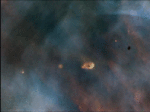
The fuzzy blobs seen above may be some of the first ever images of entire solar systems forming right before our eyes. This close up of the Orion Nebulae taken by the Hubble Space...
 Yosemite Winter Night
25.12.2012
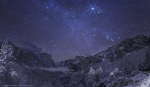
In this evocative night skyscape a starry band of the Milky Way climbs over Yosemite Valley, Sierra Nevada Range, planet Earth. Jupiter is the brightest celestial beacon on the wintry scene, though. Standing nearly opposite the Sun in the constellation Taurus, the wandering planet joins yellowish Aldebaran and the Hyades star cluster.
 Meteors vs Supermoon
15.12.2016
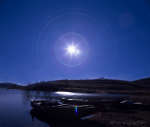
Geminid meteors battled supermoonlight in planet Earth's night skies on December 13/14. Traveling at 35 kilometers (22 miles) per second, the bits of dust from the mysterious asteroid 3200 Phaethon that produce the meteor streaks are faster than a speeding bullet.
|
January February March April May June July August September |
|||||||||||||||||||||||||||||||||||||||||||||||||