
|
You entered: sky
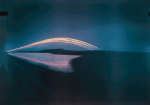 Solstice to Solstice Solargraph Timelapse
20.12.2019
The 2019 December Solstice, on the first day of winter in planet Earth's northern hemisphere and summer in the south, is at 4:19 Universal Time December 22. That's December 21 for North America, though. Celebrate with a timelapse animation of the Sun's seasonal progression through the sky.
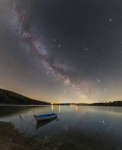 Lyrid Meteors from the Constellation Lyra
11.05.2020
Where are all of these meteors coming from? In terms of direction on the sky, the pointed answer is the constellation of Small Harp (Lyra). That is why the famous meteor shower that peaks every April is known as the Lyrids -- the meteors all appear to came from a radiant toward Lyra.
 Spiral Galaxy NGC 2841
22.03.2023
A mere 46 million light-years distant, spiral galaxy NGC 2841 can be found in planet Earth's night sky toward the northern constellation of Ursa Major. This sharp image centered on the gorgeous island universe also captures spiky foreground Milky Way stars and more distant background galaxies within the same telescopic field of view.
 APOD: 2023 December 19 Б NGC 1499: The California Nebula
18.12.2023
Could Queen Calafia's mythical island exist in space? Perhaps not, but by chance the outline of this molecular space cloud echoes the outline of the state of California, USA. Our Sun has its home within the Milky Way's Orion Arm, only about 1,000 light-years from the California Nebula.
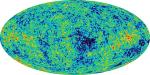 WMAP Resolves the Universe
11.02.2003
Analyses of a new high-resolution map of microwave light emitted only 380,000 years after the Big Bang appear to define our universe more precisely than ever before. The eagerly awaited results from the orbiting Wilkinson Microwave Anisotropy Probe resolve several long-standing disagreements in cosmology rooted in less precise data.
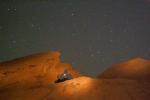 Mars Rising Through Arch Rock
15.07.2003
Mars is heading for its closest encounter with Earth in over 50,000 years. Although Mars and Earth continue in their normal orbits around the Sun, about every two years Earth and Mars are on the same part of their orbit as seen from the Sun.
 Venus and the Pleiades
15.04.2004
Venus still rules the western skies after sunset as the brilliant evening star. While wandering the ecliptic with its fellow naked-eye planets earlier this month, it passed near the Pleiades star cluster, providing a striking photo opportunity for earthbound skygazers.
 NGC 6240: Merging Galaxies
18.06.2009
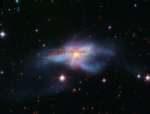
NGC 6240 offers a rare glimpse of a cosmic catastrophe in its final throes. The titanic galaxy-galaxy collision is located a mere 400 million light-years away in the constellation Ophiuchus. One of the brightest...
 Multicolor Venus
1.03.2012
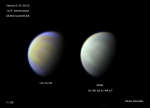
Brilliant Venus now shines in western skies at twilight. Seen as the prominent evening star, the planet is a tantalizing celestial beacon even for casual skygazers. Venus can offer less than satisfying telescopic views though. The planet is shrouded in reflective clouds that appear bright but featureless at the eyepiece.
 Lisbon Honey Moon
21.06.2014
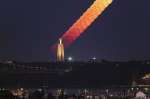
The Sun set on Friday the 13th as a full Honey Moon rose, captured in this well-planned time-lapse sequence. Lisbon, Portugal's Christ the King monument is in the foreground, about 6 kilometers distant from camera and telephoto lens.
|
January February March April May June July August September October |
|||||||||||||||||||||||||||||||||||||||||||||||||