
|
You entered: rotation
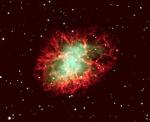 M1: Filaments of the Crab Nebula
7.02.1997
The Crab Nebula is filled with mysterious filaments. The Crab Nebula is the result of a star that exploded in 1054 AD. This spectacular supernova explosion was recorded by Chinese and (quite probably) Anasazi Indian astronomers.
 Earth, Clouds, Sky, Comet
3.04.1997
Does a comet's dust tail always orbit behind it? Since comets rotate, they shed gas and dust in all directions equally. Small ice and dust particles expelled by the comet, however, are literally pushed around by sunlight. The smaller the particle, the greater the effect.
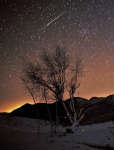 A Meteor Moment
17.12.2010
Intensely bright, this fireball meteor flashed through Tuesday's cold, clear, early morning skies over the Karakas Mountains in central Iran, near the peak of the annual Geminid Meteor Shower. To capture the meteor moment and wintery night skyscape, the photographer's camera was fixed to a tripod, its shutter open for about 1.5 minutes.
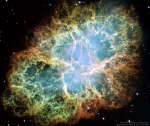 M1: The Crab Nebula from Hubble
9.09.2018
This is the mess that is left when a star explodes. The Crab Nebula, the result of a supernova seen in 1054 AD, is filled with mysterious filaments. The filaments are not only tremendously...
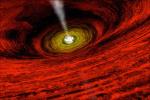 GRO J1655 40: Evidence for a Spinning Black Hole
8.05.2001
In the center of a swirling whirlpool of hot gas is likely a beast that has never been seen directly: a black hole. Studies of the bright light emitted by the swirling gas frequently indicate not only that a black hole is present, but also likely attributes.
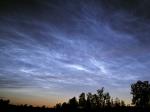 Noctilucent Clouds Over Sweden
18.07.2006
Sometimes it's night on the ground but day in the air. As the Earth rotates to eclipse the Sun, sunset rises up from the ground. Therefore, at sunset on the ground, sunlight still shines on clouds above.
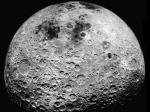 The Far Side of the Moon
25.02.2007
Does this moon look familiar? Possibly not, even though it is Earth's Moon. Locked in synchronous rotation, the Moon always presents its well-known near side to Earth. But from lunar orbit, Apollo astronauts also grew to know the Moon's far side.
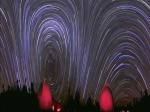 Warped Sky: Star Trails Panorama
13.06.2007
What's happened to the sky? A time warp, of sorts, and a digital space warp too. The time warp occurs because the above image captured in a single frame a four hour exposure of the night sky. Prominent and picturesque star trails are visible.
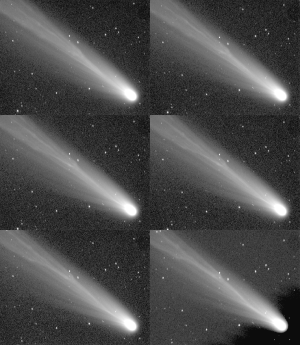 Tail Wags of Comet Ikeya Zhang
15.05.2002
As Comet Ikeya-Zhang approached the Sun two months ago, it developed a complex blue ion tail. The tail was composed of ions that boiled off the nucleus and were pushed away from the Sun by the out-flowing fast-moving particles of the solar wind.
 Comet Hale-Bopp Update
30.10.1995
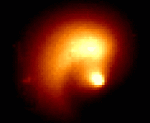
Will comet Hale-Bopp become the brightest comet of the Century in early 1997? Since its discovery in July this year, Hale-Bopp has caused much speculation. Even though it is still beyond the orbit of Jupiter it is astonishingly bright and expected to get much brighter as it plunges inward, toward the Sun.
|
January February |
|||||||||||||||||||||||||||||||||||||||||||||||||