
|
You entered: time
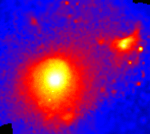 The Virgo Cluster: Hot Plasma and Dark Matter
19.04.1996
This ROSAT image of the Virgo cluster of galaxies reveals a hot X-ray emitting plasma or gas with a temperature of 10-100 million degrees pervading the cluster. False colors have been used to represent the intensity of X-ray emission.
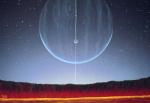 A Year of Assessing Astronomical Hazards
31.12.2002
Could an asteroid destroy civilization on Earth? Mountain-sized space rocks could potentially impact the Earth causing global effects, and perhaps even be mistaken for a nuclear blast of terrestrial origin. Such large impacts are rare but have happened before. Modern telescopes have therefore begun to scan the skies for signs of approaching celestial hazards.
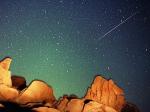 A Perseid Meteor
11.08.2004
The ongoing Perseid Meteor Shower should be at its strongest tonight and tomorrow night. Although meteors should be visible all night long, the best time to watch will be between 2:00 AM and dawn each night. In dark, moonless, predawn skies you may see dozens of meteors per hour.
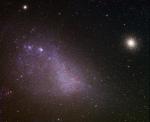 The Small Cloud of Magellan
17.06.2005
Portuguese navigator Ferdinand Magellan and his crew had plenty of time to study the southern sky during the first circumnavigation of planet Earth. As a result, two celestial wonders easily visible for southern hemisphere skygazers are known as the Clouds of Magellan.
 X Ray Stars of Orion
6.10.2007
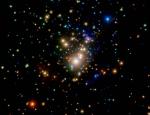
The stars of Orion shine brightly in visible light in planet Earth's night sky. The constellation harbors the closest large stellar nursery, the Great Nebula of Orion, a mere 1,500 light-years away.
 Night Lights
4.11.2010
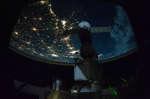
Constellations of lights sprawl across this night scene, but they don't belong in the skies of planet Earth. Instead, the view looks down from the International Space Station as it passed over the United States along the northern Gulf Coast on October 29. A Russian Soyuz spacecraft is docked in the foreground.
 The Center of Centaurus A
7.11.2010
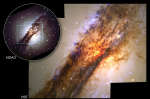
A fantastic jumble of young blue star clusters, gigantic glowing gas clouds, and imposing dark dust lanes surrounds the central region of the active galaxy Centaurus A. This mosaic of Hubble Space Telescope images taken in blue, green, and red light has been processed to present a natural color picture of this cosmic maelstrom.
 M27: The Dumbbell Nebula
27.12.2011
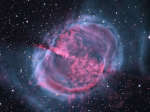
The first hint of what will become of our Sun was discovered inadvertently in 1764. At that time, Charles Messier was compiling a list of diffuse objects not to be confused with comets.
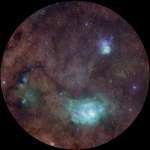 Pan STARRS and Nebulae
12.10.2012
A single image from the world's most powerful survey instrument captured this spectacular skyview. Looking toward Sagittarius, the scene spans nearly 3 degrees or six times the width of the Full Moon.
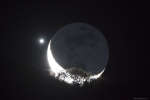 Moon and Venus Appulse over a Tree
6.02.2019
What's that bright spot near the Moon? Venus. About a week ago, Earth's Moon appeared unusually close to the distant planet Venus, an angular coincidence known as an appulse. Similar to a conjunction, which is a coordinate term, an appulse refers more generally to when two celestial objects appear close together.
|
January February March April May June July August September |
|||||||||||||||||||||||||||||||||||||||||||||||||