
|
You entered: Earth
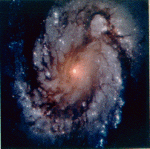 Spiral Galaxy M100
26.06.1995
The M100 galaxy is a large spiral galaxy similar to our own Milky Way, containing over 100 billion stars. It is over 150 million light years away, so the light we see left when dinosaurs roamed the Earth.
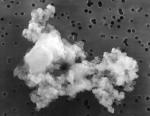 A Piece of Interplanetary Dust
13.08.2001
The dust that pervades our Solar System is not the dust that pervades our homes. Solar System dust comes from comets and asteroids, whereas house dust is most likely lint or dead cells. Pictured above is a piece of interplanetary dust caught by a high-flying U2-type aircraft.
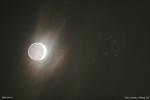 Young Moon and Sister Stars
28.04.2007
A young crescent Moon shared the western sky with thin clouds and the sister stars of the Pleiades cluster in this early evening skyscape recorded on April 19th. Astronomical images of the well-known Pleiades often show the star cluster's alluring blue reflection nebulae, but they are washed-out here in the clouds and bright moonlight.
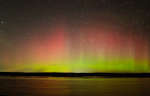 Nova Scotia Northern Lights
2.04.2022
This almost otherworldly display of northern lights was captured in clear skies during the early hours of March 31 from 44 degrees north latitude, planet Earth. In a five second exposure the scene looks north from Martinique Beach Provincial Park in Nova Scotia, Canada.
 APOD: 2023 October 30 Б Reflections of the Ghost Nebula
30.10.2023
Do any shapes seem to jump out at you from this interstellar field of stars and dust? The jeweled expanse, filled with faint, starlight-reflecting clouds, drifts through the night in the royal constellation of Cepheus.
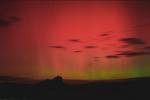 Aurora in Colorado Skies
30.10.2003
Vivid auroral displays were triggered by a cloud of high energy particles from the Sun that collided with planet Earth's magnetosphere yesterday, October 29, at about 06:30 Universal Time. The collision...
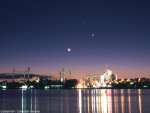 Planets over Perth
12.09.2008
A bright trio of terrestrial planets were joined by a young Moon on September 1st, in planet Earth's early evening skies. In this view of the celestial gathering from Perth, Western Australia, the Moon's sunlit crescent is nearly horizontal at Perth's southern latitude of about 32 degrees.
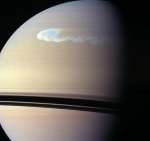 Saturn Storm
19.01.2011
Late last year, a new, remarkably bright storm erupted in Saturn's northern hemisphere. Amateur astronomers first spotted it in early December, with the ringed gas giant rising in planet Earth's predawn sky.
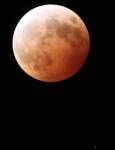 Moons at Opposition
10.10.2014
From the early hours of October 8, over the Santa Cruz Mountains near Los Gatos, California, the totally eclipsed Moon shows a range of color across this well-exposed telescopic view of the lunar eclipse.
 Daytime Moon Meets Morning Star
16.11.2023
Venus now appears as Earth's brilliant morning star, shining above the southeastern horizon before dawn. For early morning risers, the silvery celestial beacon rose predawn in a close pairing with a waning crescent Moon on Thursday, November 9.
|
January February March April May June July August September October |
|||||||||||||||||||||||||||||||||||||||||||||||||