
|
You entered: time
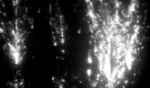 Sprite Lightning at 100000 Frames Per Second
4.01.2021
What causes sprite lightning? Mysterious bursts of light in the sky that momentarily resemble gigantic jellyfish have been recorded for over 30 years, but apart from a general association with positive cloud-to-ground lightning, their root cause remains unknown. Some thunderstorms have them -- most don't.
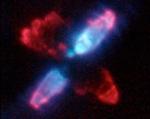 Shells in the Egg Nebula
26.06.1999
The Egg Nebula is taking a beating. Like a baby chick pecking its way out of an egg, the star in the center of the Egg Nebula is casting away shells of gas and dust as it slowly transforms itself into a white dwarf star.
 A Spiral Galaxy Gallery
9.04.1996
A progression of beautiful spiral galaxies is illustrated above with three photographs from NASA's Ultraviolet Imaging Telescope (UIT). Flying above the Earth's obscuring layer of atmosphere on the Space Shuttle Columbia during...
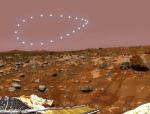 Martian Analemma
26.06.2003
On planet Earth, an analemma is the figure-8 loop you get when you mark the position of the Sun at the same time each day throughout the year. But similarly marking the position...
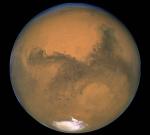 Big Mars from Hubble
27.08.2003
At about 10 am Universal Time today, Mars and Earth will pass closer than in nearly 60,000 years. Mars, noticeably red, will be the brightest object in the eastern sky just after sunset.
 Zodiacal Light and the False Dawn
25.08.2004
An unusual triangle of light will be particularly bright near the eastern horizon before sunrise during the next two months for observers in Earth's northern hemisphere. Once considered a false dawn, this triangle of light is actually Zodiacal Light, light reflected from interplanetary dust particles.
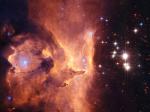 Massive Stars in Open Cluster Pismis 24
19.12.2006
How massive can a normal star be? Estimates made from distance, brightness and standard solar models had given one star in the open cluster Pismis 24 over 200 times the mass of our Sun, making it a record holder.
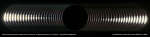 Baily s Beads near Solar Eclipse Totality
18.08.2008
Just before the Sun blacks out, something strange occurs. As the Moon moves to completely cover the Sun in a total solar eclipse, beads of bright sunlight stream around the edge of the Moon. This effect, known as Baily's beads, is named after Francis Baily who called attention to the phenomenon in 1836.
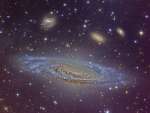 Beautiful Spiral NGC 7331
22.10.2008
A favorite target for astronomers, big, beautiful spiral galaxy NGC 7331 is one of the brighter galaxies not found in Charles Messier's famous 18th century catalog. About 50 million light-years distant...
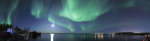 Aurora Over Yellowknife
22.09.2009
Sometimes, after your eyes adapt to the dark, a spectacular sky appears. In this case, a picturesque lake lies in front of you, beautiful green auroras flap high above you, brilliant stars shine far in the distance, and a brilliant moon shines just ahead of you.
|
January February March April May June July August September |
|||||||||||||||||||||||||||||||||||||||||||||||||