
|
You entered: Earth
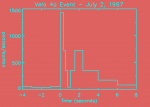 Gamma-Ray Burst: A Milestone Explosion
2.07.1997
Gamma-Ray Bursts (GRBs) were discovered by accident. In fact, GRBs always seem to be where scientists least expect them. Thirty years ago today, satellites first recorded a GRB. The burst data plotted in this histogram show that the count rate of the gamma-ray instrument abruptly jumped indicating a sudden flash of gamma-rays.
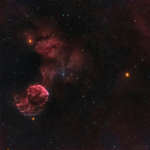 The Jellyfish and Mars
19.05.2021
Normally faint and elusive, the Jellyfish Nebula is caught in this alluring scene. In the telescopic field of view two bright yellowish stars, Mu and Eta Geminorum, stand just below and above the Jellyfish Nebula at the left. Cool red giants, they lie at the foot of the celestial twin.
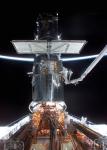 SM3B: Mission to Hubble
14.03.2002
Now complete, Servicing Mission 3B (SM3B) was really the fourth trip to the Hubble Space Telescope, as the originally planned mission 3 was split into two parts. Falling around planet Earth, about 320 nautical...
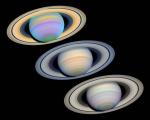 Saturn by Three
18.09.2003
These three views of Saturn were recorded by the Hubble Space Telescope on March 7th of this year, as the southern hemisphere of the solar system's most gorgeous planet reached its maximum 27 degree tilt toward Earth.
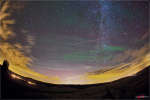 Airglow Over Germany
5.09.2012
Does air glow? It does, but it is usually hard to see. When conditions are right, however, a faint glow about 90 kilometers up can be observed, most easily with a wide-angle long-duration camera exposure.
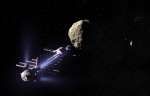 Gravitational Tractor
21.02.2013
How would you change the course of an Earth-threatening asteroid? One possibility - a massive spacecraft that uses gravity as a towline - is illustrated in this artist's vision of a gravitational tractor in action.
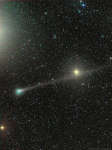 Rosetta s Comet in Gemini
13.11.2021
Returning along its 6.4 year orbit, periodic comet Churyumov-Gerasimenko (67P) is caught in this telescopic frame from November 7. Sweeping past background stars in the constellation Gemini the comet's dusty tail stretches toward the upper right to Upsilon Geminorum.
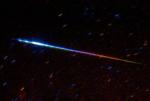 A Perseid Meteor
11.08.2002
The ongoing Perseid Meteor Shower should be at its strongest on August 12 and 13. The best time to watch will be between 2:00 AM and dawn on Monday morning (so plan on setting your alarm tonight!) and then again on Tuesday.
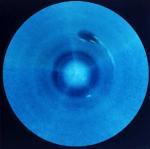 Southern Neptune
10.07.1999
Neptune, the Solar System's outermost gas giant planet, is 30 times farther from the Sun than Earth. Twelve years after a 1977 launch, Voyager 2 flew by Neptune and found surprising activity on a planet that receives only 3 percent as much sunlight as Jupiter.
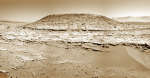 Curiosity Inspects Mt Remarkable on Mars
7.05.2014
What has the Curiosity rover come across on Mars? Dubbed Mount Remarkable, the rolling robot has chanced upon this notable 5-meter tall mound during its continuing journey around and, eventually, up 5.5-kilometer high Mt. Sharp.
|
January February March April May June July August September October |
|||||||||||||||||||||||||||||||||||||||||||||||||