
|
You entered: distance
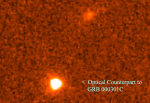 A GRB 000301C Symphony
3.06.2001
Last March, telescopic instruments in Earth and space tracked a tremendous explosion that occurred across the universe. A nearly unprecedented symphony of international observations began abruptly on 2000 March 1 when Earth-orbiting RXTE, Sun-orbiting Ulysses, and asteroid-orbiting NEAR all detected a 10-second burst of high-frequency gamma radiation. Within 48 hours astronomers
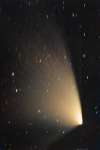 The Broad Tail of PanSTARRS
30.03.2013
For northern hemisphere skygazers, fading Comet PanSTARRS (C/2011 L4) still hangs above the western horzion, after sunset but before moonrise in the coming days. Its perspective from planet Earth continues to reveal the comet's broad dust tail.
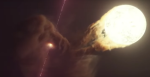 APOD: 2020 August 31 Б SS 433: Binary Star Micro Quasar
31.08.2020
SS 433 is one of the most exotic star systems known. Its unremarkable name stems from its inclusion in a catalog of Milky Way stars which emit radiation characteristic of atomic hydrogen. Its remarkable behavior stems from a compact object, a black hole or neutron star, which has produced an accretion disk with jets.
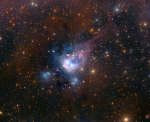 Young Suns of NGC 7129
29.08.2016
Young suns still lie within dusty NGC 7129, some 3,000 light-years away toward the royal constellation Cepheus. While these stars are at a relatively tender age, only a few million years old, it is likely that our own Sun formed in a similar stellar nursery some five billion years ago.
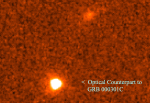 A GRB 000301C Symphony
14.03.2000
Telescopic instruments in Earth and space are still tracking a tremendous explosion that occurred across the universe. A nearly unprecedented symphony of international observations began abruptly on March 1 when Earth-orbiting RXTE, Sun-orbiting Ulysses, and asteroid-orbiting NEAR all detected a 10-second burst of high-frequency gamma radiation.
|
January February March April May June July August September |
|||||||||||||||||||||||||||||||||||||||||||||||||