
|
You entered: time
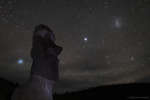 Stars Over Easter Island
12.10.2009
Why were the statues on Easter Island built? No one is sure. What is sure is that over 800 large stone statues exist there. The Easter Island statues, stand, on the average, over twice as tall as a person and have over 200 times as much mass.
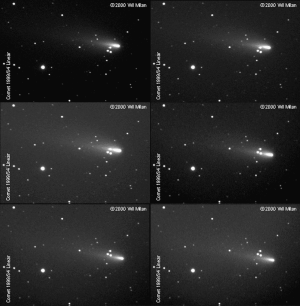 Comet LINEAR Approaches
4.07.2000
Just possibly, a new comet may become bright enough to see without binoculars later this month. Comet C/1999 S4 LINEAR is rapidly approaching both the Earth and the Sun from the outer Solar System, and should be at its brightest around 2000 July 25 in the early evening sky of northern observers.
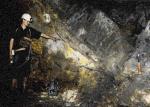 Oklo: Ancient African Nuclear Reactors
16.10.2002
The remnants of nuclear reactors nearly two billion years old were found in the 1970s in Africa. These reactors are thought to have occurred naturally. No natural reactors exist today, as the relative density of fissionable uranium has now decayed below that needed for a sustainable reaction.
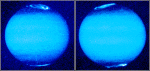 Jupiter's Auroras
18.10.1996
Auroras are especially large on Jupiter. In pictures released yesterday, the Hubble Space Telescope imaged these unusual light displays in more detail than ever before. Jupiter's auroras are linked to its volcanic moon Io.
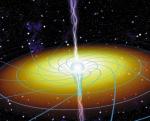 Evidence for Frame Dragging Black Holes
7.11.1997
Gravity can do more than floor you. According to recent measurements of a star system thought to contain a black hole, it can spin you too. This effect, called frame-dragging, is most prominent near massive, fast spinning objects. Now, a team led by W.
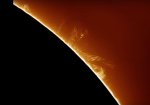 An Active Prominence on the Sun
18.06.2018
Sometimes the Sun's surface becomes a whirlwind of activity. Pictured is a time-lapse video of the Sun's surface taken over a two hour period in early May, run both forwards and backwards. The Sun's surface was blocked out so that details over the edge could be imaged in greater detail.
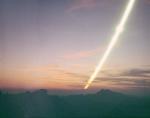 A Setting Sun Trail
29.07.2002
The Sun appears to move on the sky because the Earth rotates. The extreme brightness of the Sun, however, makes it difficult to capture a sun-trail -- the path the Sun traces on the sky.
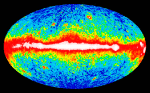 Gamma Ray Sky Map
23.06.1995
What if you could "see" gamma rays? This computer processed image represents a map of the entire sky at photon energies above 100 million electron Volts. These gamma-ray photons are more than 40 million times more energetic than visible light photons and are blocked from the Earth's surface by the atmosphere.
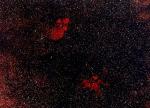 The Cat's Paw Nebula
7.12.1999
As soon as we find out whose cat did this . . . Nebulae are as famous for being identified with familiar shapes as perhaps cats are for getting into trouble. No cat, though, could have created the vast Cat's Paw Nebula visible in Scorpius.
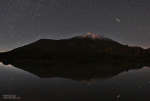 Teide Sky Trails
12.02.2010
The snow capped Teide volcano is reflected in a pool of water in this nearly symmetric night sky view from the Canary Island Tenerife. Bright north star Polaris stands above the peak in an exposure that also captures the brilliant trail of a polar orbiting Iridium satellite.
|
January February March April May June July August September |
|||||||||||||||||||||||||||||||||||||||||||||||||