
|
You entered: Earth
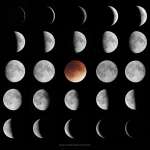 Phases of the Moon
10.03.2018
Look at the Moon every night and its visible sunlit portion gradually changes. In phases progressing from New Moon to Full Moon to New Moon again, a lunar cycle or lunation is completed in about 29.5 days.
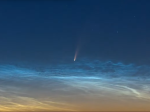 Comet NEOWISE Rising over the Adriatic Sea
26.07.2022
This sight was worth getting out of bed early. Two years ago this month, Comet C/2020 F3 (NEOWISE) rose before dawn to the delight of northern sky enthusiasts awake that early. Up before sunrise...
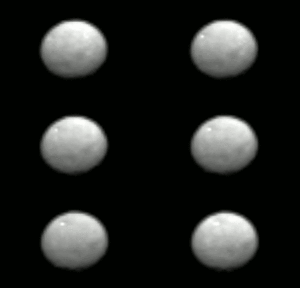 Approaching Asteroid Ceres
19.01.2015
It is the largest asteroid in the asteroid belt -- what secrets does it hold? To find out, NASA has sent the robotic Dawn spacecraft to explore and map this cryptic 1,000-kilometer wide world: Ceres. Orbiting between Mars and Jupiter, Ceres is officially categorized as a dwarf planet but has never been imaged in detail.
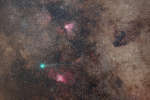 SWAN, Swan, Eagle
23.10.2025
Comet C/2025 R2 (SWAN) sports a greenish coma and fainter tail, seen against congeries of stars and dusty interstellar clouds in this 7 degree wide telescopic field of view from October 17. On that...
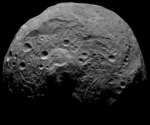 Vesta Vista
19.07.2011
What does the surface of asteroid Vesta look like? The brightest asteroid in the Solar System and the object which takes up about 10 percent of the entire mass of the main asteroid belt had never been seen up close before.
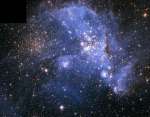 NGC 346 in the Small Magellanic Cloud
17.10.2010
How and why are all these stars forming? Found among the Small Magellanic Cloud's (SMC's) clusters and nebulae NGC 346 is a star forming region about 200 light-years across, pictured above by the Hubble Space Telescope.
 Dark Markings of the Sky
25.04.2009
Based on wide field photographs, American astronomer Edward Emerson Barnard cataloged the dark markings of the sky in the early 20th century. Barnard's markings are dark nebulae, interstellar clouds of obscuring gas and dust.
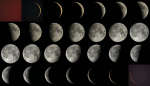 Lunation Matrix
1.10.2022
Observe the Moon every night and you'll see its visible sunlit portion gradually change. In phases progressing from New Moon to Full Moon to New Moon again, a lunar cycle or lunation is completed in about 29.5 days.
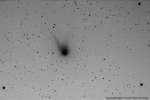 Introducing Comet Garradd
27.07.2011
Another large snowball is falling toward the Sun. Comet Garradd was discovered two years ago by Gordon Garradd in Australia, and is currently visible through a small telescope at visual magnitude nine. Officially designated...
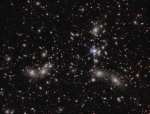 APOD: 2025 October 3 Б Pandora's Cluster of Galaxies
3.10.2025
This deep field mosaicked image presents a stunning view of galaxy cluster Abell 2744 recorded by the James Webb Space Telescope's NIRCam. Also dubbed Pandora's Cluster, Abell 2744 itself appears to be a ponderous merger of three different massive galaxy clusters. It lies some 3.5 billion light-years away, toward the constellation Sculptor.
|
January February March April May June July August September October |
|||||||||||||||||||||||||||||||||||||||||||||||||