
|
You entered: stars
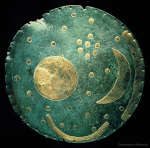 The Nebra Sky Disk
19.03.2018
It is considered the oldest known illustration of the night sky. But what, exactly, does it depict, and why was it made? The Nebra sky disk was found with a metal detector in 1999 by treasure hunters near Nebra, Germany, in the midst of several bronze-age weapons.
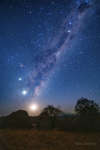 Moon, Four Planets, and Emu
8.02.2019
A luminous Milky Way falls toward the horizon in this deep skyscape, starting at the top of the frame from the stars of the Southern Cross and the dark Coalsack Nebula. Captured...
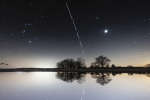 Reflecting the International Space Station
28.05.2020
Still bathed in sunlight, the International Space Station arced through the evening sky over lake Wulfsahl-Gusborn in northern Germany, just after sunset on March 25. The familiar constellation of Orion can be seen left of the trail of the orbital station's bright passage.
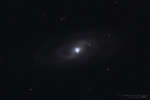 The Einstein Cross Gravitational Lens
17.10.2021
Most galaxies have a single nucleus -- does this galaxy have four? The strange answer leads astronomers to conclude that the nucleus of the surrounding galaxy is not even visible in this image. The central cloverleaf is rather light emitted from a background quasar.
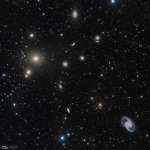 The Fornax Cluster of Galaxies
29.01.2022
Named for the southern constellation toward which most of its galaxies can be found, the Fornax Cluster is one of the closest clusters of galaxies. About 62 million light-years away, it is almost...
 Meteors along the Milky Way
24.08.2023
Under dark and mostly moonless night skies, many denizens of planet Earth were able to watch this year's Perseid meteor shower. Seen from a grassy hillside from Shiraz, Iran these Perseid meteors streak along the northern summer Milky Way before dawn on Sunday, August 13.
 NGC 7814: Little Sombrero
23.01.2025
Point your telescope toward the high flying constellation Pegasus and you can find this cosmic expanse of Milky Way stars and distant galaxies. NGC 7814 is centered in the sharp field of view that would almost be covered by a full moon.
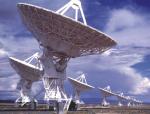 The Very Large Array of Radio Telescopes
28.05.2002
The most photogenic array of radio telescopes in the world has also been one of the most productive. Each of the 27 radio telescopes in the Very Large Array (VLA) is the size of a house and can be moved on train tracks.
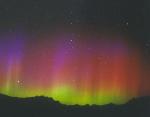 Meteors and Northern Lights
15.08.2002
Skygazers report that the annual Perseid meteor shower went pretty much as predicted, producing a meteor every few minutes during the dark early morning hours of August 12 and 13. And as the constellation...
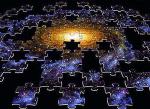 Will the Universe End in a Big Rip
3.03.2003
How will our universe end? Recent speculation now includes a pervasive growing field of mysterious repulsive energy that rips virtually everything apart. Although the universe started with a Big Bang, analysis of recent cosmological measurements allows a possibility that it will end with a Big Rip.
|
January February March April May June July August September October |
|||||||||||||||||||||||||||||||||||||||||||||||||