
|
You entered: impact
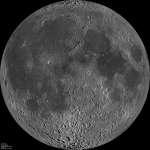 Lunar Nearside
3.03.2011
About 1,300 images from the Lunar Reconnaissance Orbiter spacecraft's wide angle camera were used to compose this spectacular view of a familiar face - the lunar nearside. But why is there a lunar nearside? The Moon rotates on its axis and orbits the Earth at the same rate, about once every 28 days.
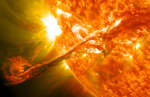 A Solar Filament Erupts
17.09.2012
What's happened to our Sun? Nothing very unusual -- it just threw a filament. At the end of last month, a long standing solar filament suddenly erupted into space producing an energetic Coronal Mass Ejection (CME).
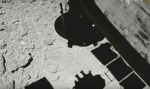 Touchdown on Asteroid Ryugu
12.03.2019
Last month, humanity bounced a robot off an asteroid. The main reason was to collect a surface sample. Despite concern over finding a safely reboundable touchdown spot, Japan's robotic Hayabusa2 spacecraft successfully touched down -- and bounced right back from -- asteroid Ryugu.
 APOD: 2023 November 26 Б A Dust Jet from the Surface of Comet 67P
26.11.2023
Where do comet tails come from? There are no obvious places on the nuclei of comets from which the jets that create comet tails emanate. In 2016, though, ESA's Rosetta spacecraft not only imaged a jet emerging from Comet 67P/Churyumov-Gerasimenko, but flew right through it.
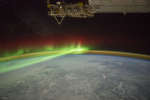 Aurora and Manicouagan Crater from the Space Station
29.05.2018
How many of these can you find in today's featured photograph: an aurora, airglow, one of the oldest impact craters on the Earth, snow and ice, stars, city lights, and part of the International Space Station? Most of these can be identified by their distinctive colors.
 Rolling Across the Rocky Plains of Mars
4.10.2010
You stare out across the rocky plains of Mars. Before you, in every direction, is dark sand and bright rock. Although little has changed here for millions of years, no one has ever seen this view before. You are being sent on a long journey to a distant crater, the largest crater in the region.
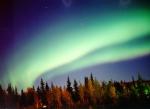 The Secret of the Black Aurora
1.01.2002
What causes black aurora? These gaps in normal bright aurora are frequently recorded but rarely questioned. Recent research using data from four Cluster spacecraft orbiting the Earth has now likely found the secret: black auroras are actually anti-auroras.
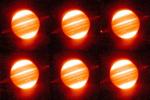 Running Red Rings Around Jupiter
5.02.1997
Jupiter has rings, too. Unlike Saturn's bright rings which are composed of chunks of ice, Jupiter's rings are darker and appear to consist of fine particles of rock. The six pictures above...
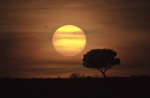 Sunspot Group 1429 and the Distant Sun
19.03.2012
What's that on the Sun? Over the past two weeks, one of the most energetic sunspot regions of recent years crossed the face of the Sun. Active Region 1429, visible above...
 APOD: 2024 November 12 Б NGC 6888: The Crescent Nebula
12.11.2024
How was the Crescent Nebula created? Looking like an emerging space cocoon, the Crescent Nebula, visible in the center of the featured image, was created by the brightest star in its center. A leading progenitor hypothesis has the Crescent Nebula beginning to form about 250,000 years ago.
|
January February |
|||||||||||||||||||||||||||||||||||||||||||||||||