
|
You entered: Sun
 A Total Lunar Eclipse Over Tajikistan
11.07.2011
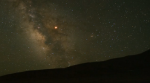
If the full Moon suddenly faded, what would you see? The answer during the total lunar eclipse last month was recorded in a dramatic time lapse video from Tajikistan. During a total lunar eclipse, the Earth moves between the Moon and the Sun, causing the moon to fade dramatically.
 Lewins Challenge: 360 Degree Star Trails
17.07.2011
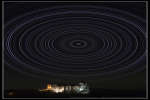
You could be the first person ever to take a real single-exposure image like this. The above image from Vienna, Austria is not real in the sense that the 360 degree star trails in the sky appear only because of a digital trick.
 Comets Lemmon and PanSTARRS Peaking
5.03.2013
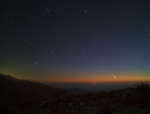
Two impressive comets will both reach their peak brightness during the next two weeks. Taking advantage of a rare imaging opportunity, both of these comets were captured in the sky together last week over the Atacama desert in South America.
 NGC 7789: Caroline's Rose
15.11.2017
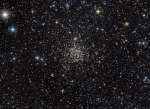
Found among the rich starfields of the Milky Way, star cluster NGC 7789 lies about 8,000 light-years away toward the constellation Cassiopeia. A late 18th century deep sky discovery of astronomer Caroline Lucretia Herschel, the cluster is also known as Caroline's Rose.
 APOD: 2023 July 30 Б Spiral Aurora over Icelandic Divide
30.07.2023
Admire the beauty but fear the beast. The beauty is the aurora overhead, here taking the form of a great green spiral, seen between picturesque clouds with the bright Moon to the side and stars in the background.
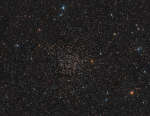 NGC 7789: Caroline s Rose
6.07.2024
Found among the rich starfields of the Milky Way, star cluster NGC 7789 lies about 8,000 light-years away toward the constellation Cassiopeia. A late 18th century deep sky discovery of astronomer Caroline Lucretia Herschel, the cluster is also known as Caroline's Rose.
 Mars in the Loop
30.05.2025
This composite of images spaced a weather-permitting 5 to 9 days apart, from 2024 September 19 (top right) through 2025 May 18 (bottom left), faithfully traces ruddy-colored Mars as it makes a clockwise loop through the constellations Gemini and Cancer in planet Earth's night sky.
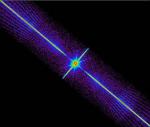 X Ray Rainbows
11.05.2001
A drop of water or prism of glass can spread out visible sunlight into a rainbow of colors. In order of increasing energy, the well known spectrum of colors in a rainbow runs red, orange, yellow, green, blue, indigo, violet.
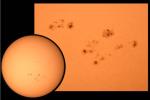 Sunspots and Solar Active Regions
1.08.2002
July was a good month for sunspots ... really big sunspots. In fact, the full disk and inset pictures above show three large groups of spots, photographed only a few days ago on July 28. Together the sunspots span a region about thirty times the diameter of planet Earth.
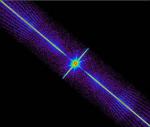 X Ray Rainbows
28.09.2002
A drop of water or prism of glass can spread out visible sunlight into a rainbow of colors. In order of increasing energy, the well known spectrum of colors in a rainbow runs red, orange, yellow, green, blue, indigo, violet.
|
January February March April May June July August September |
|||||||||||||||||||||||||||||||||||||||||||||||||