
|
You entered: sky
 APOD: 2024 November 25 Б The Horsehead Nebula
25.11.2024
One of the most identifiable nebulas in the sky, the Horsehead Nebula in Orion, is part of a large, dark, molecular cloud. Also known as Barnard 33, the unusual shape was first discovered on a photographic plate in the late 1800s.
 APOD: 2024 December 1 Б Cosmic Latte: The Average Color of the Universe
1.12.2024
What color is the universe? More precisely, if the entire sky were smeared out, what color would the final mix be? This whimsical question came up when trying to determine what stars are commonplace in nearby galaxies. The answer, depicted here, is a conditionally perceived shade of beige. In computer parlance: #FFF8E7.
 APOD: 2026 July 18 БShadow and Rainbow
18.07.2026
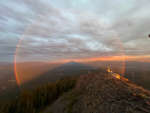
At sunset, an alignment of rainbow and mountain shadow was captured in this remarkable snapshot. The stunning view was recorded from a fire lookout on Smith Peak in the Plumas National Forest near Portola, California on July 13.
 Hale-Bopp: The Crowd Pleaser Comet
9.07.1998
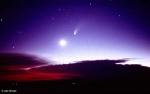
In 1997, the bright comet Hale-Bopp may have become the most viewed comet in history -- visible even to casual skywatchers in light polluted cities around the globe. In this picture, taken by photographer...
 Comet NEAT Approaches the Sun
10.02.2003
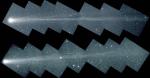
A comet may likely become visible to the unaided eye over the next few days above the horizon where the Sun has just set. Comet NEAT (C/ 2002 V1), discovered last November, has brightened dramatically as it approached the Sun.
 Southwest Mercury
16.02.2003
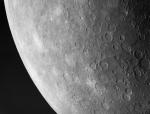
The planet Mercury resembles a moon. Mercury's old surface is heavily cratered like many moons. Mercury is larger than most moons but smaller than Jupiter's moon Ganymede and Saturn's moon Titan. Mercury is much denser and more massive than any moon, though, because it is made mostly of iron.
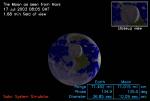 Mars Simulated View
16.07.2003
When earthdweller Patrick Vantuyne wondered what his home planet's single large moon would look like if viewed from Mars on July 17, he availed himself of the JPL Solar System Simulator. Of course...
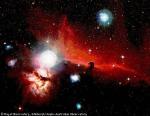 Orion's Horsehead Nebula
25.10.1997
The Horsehead Nebula is one of the most famous nebulae on the sky. It is visible as the black indentation to the red emission nebula seen just to the right of center of the above photograph. The bright star near the center is located in the belt of the familiar constellation of Orion.
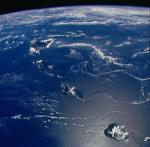 Hawaii
25.07.1998
Aloha! With the graceful arc of the Earth's limb in the background, the Hawaiian Island archipelago is visible in this stunning photo taken by the astronauts onboard the shuttle Discovery in October of 1988. Along with popular beaches and tropical resorts, these volcanic islands offer extreme elevations with dark, dry, cloudless skies.
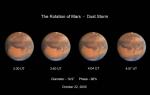 October Mars
28.10.2005
This October, Mars has become a bright, yellowish star in planet Earth's sky as it approaches oppositon, the period when Mars and Earth pass close as they orbit the Sun. How close is Mars? A mere 70 million kilometers or so, close enough to allow Earth-bound astronomers excellent views of the alluring Red Planet.
|
January February March April May June July August September October |
|||||||||||||||||||||||||||||||||||||||||||||||||