
|
You entered: surface
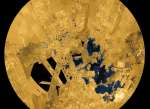 Titan s Land of Lakes
20.12.2013
Saturn's large moon Titan would be unique in our solar system, the only world with stable liquid lakes and seas on its surface ... except for planet Earth of course. Centered on the north...
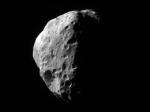 Epimetheus: A Small Moon of Saturn
24.08.2005
How did Epimetheus form? No one is yet sure. To help answer that question, this small moon has recently been imaged again in great detail by the robot spacecraft Cassini now orbiting Saturn. Epimetheus sometimes orbits Saturn in front of Janus, another small satellite, but sometimes behind.
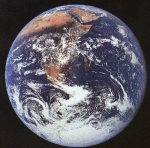 Welcome to Planet Earth
26.10.1997
Welcome to Planet Earth, the third planet from a star named the Sun. The Earth is shaped like a sphere and composed mostly of rock. Over 70 percent of the Earth's surface is water. The planet has a relatively thin atmosphere composed mostly of nitrogen and oxygen.
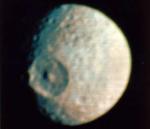 Mimas: Small Moon with a Big Crater
25.04.1999
Mimas is one of the smaller moons of Saturn but shows one of the largest impact craters. In fact, if the impact had been much greater, it would have disrupted the entire satellite. The large crater has been named Herschel after the 1789 discoverer of Mimas, Sir William Herschel.
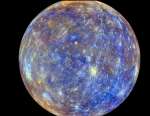 All of Mercury
12.06.2013
For the first time, the entire surface of planet Mercury has been mapped. Detailed observations of the innermost planet's surprising crust have been ongoing since the robotic MESSENGER spacecraft first passed Mercury in 2008 and began orbiting in 2011.
 Flyby Image of Saturns Sponge Moon Hyperion
3.06.2015
Why does this moon look like a sponge? To better investigate, NASA and ESA sent the Saturn-orbiting robotic spacecraft Cassini zooming past Saturn's moon Hyperion, once again, earlier this week. One of the images beamed back to Earth is featured above, raw and unprocessed.
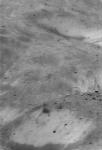 22 Miles From Eros
3.08.2000
Last month the NEAR Shoemaker spacecraft swooped closer to Eros, orbiting only 22 miles (36 kilometers) from the center of the asteroid. These two images taken on July 19 (left) and July 24 (right)...
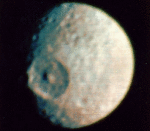 Mimas: Small Moon with A Big Crater
24.09.1995
Mimas is one of the smaller moons of Saturn but shows one of the largest impact craters! In fact, if the impact had been much greater, it would have disrupted the entire satellite. The large crater has been named Herschel after the 1789 discoverer of Mimas, Sir William Herschel.
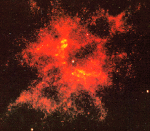 NGC 2440 Nucleus: The Hottest Star?
30.11.1995
In the center of the above photograph lies a star with one of the hottest surface temperatures yet confirmed. This bright white dwarf star's surface has been measured at greater than 200,000 degrees Celsius - more than 30 times hotter than that of our own Sun.
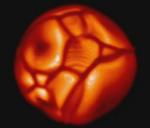 Simulated Supergiant Star
22.12.2000
Looking for that perfect holiday gift for an astronomer? Consider this "star in a box". Of course, the box is actually a computational box consisting of a three dimensional grid of points, and the star is a virtual one whose physical properties and internal dynamics are numerically simulated at the points on the grid.
|
January February March April May June July August September October |
|||||||||||||||||||||||||||||||||||||||||||||||||