
|
You entered: color
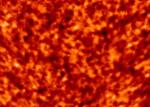 BOOMERANG Images The Early Universe
3.05.2000
Drifting through the stratosphere above Antarctica in late 1998, the balloon-borne BOOMERANG telescope peered into the cosmos at millimeter wavelengths. The blotchy structures it detected are seen above in the sharpest yet picture of the universe at an early age, perhaps a mere 300,000 years old.
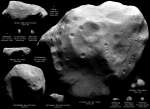 Lutetia: The Largest Asteroid Yet Visited
26.07.2010
As humans explore the universe, the record for largest asteroid visited by a spacecraft has increased yet again. Earlier this month, ESA's robotic Rosetta spacecraft zipped past the asteroid 21 Lutetia taking data and snapping images in an effort to better determine the history of the asteroid and the origin of its unusual colors.
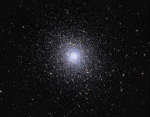 Messier 5
3.08.2012
"Beautiful Nebula discovered between the Balance [Libra] & the Serpent [Serpens] ..." begins the description of the 5th entry in 18th century astronomer Charles Messier's famous catalog of nebulae and star clusters. Though it appeared...
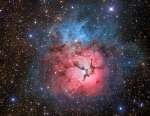 The Beautiful Trifid
25.07.2013
The beautiful Trifid Nebula is a cosmic study in contrasts. Also known as M20, it lies about 5,000 light-years away toward the nebula rich constellation Sagittarius. A star forming region in the plane...
 Antares Rocket Launch
21.09.2013
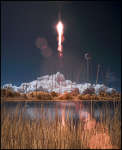
The sky looks dark in this scene from the Mid-Atlantic Regional Spaceport (MARS) at NASA Wallops Flight Facility, Virginia. Captured on Wednesday, September 18, an Orbital Sciences Corporation Antares rocket is leaving launch pad-0A with the Cygnus cargo spacecraft aboard.
 The Cosmic Web of the Tarantula Nebula
17.02.2014
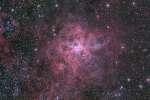
It is the largest and most complex star forming region in the entire galactic neighborhood. Located in the Large Magellanic Cloud, a small satellite galaxy orbiting our Milky Way galaxy, the region's spidery appearance is responsible for its popular name, the Tarantula nebula. This tarantula, however, is about 1,000 light-years across.
 X ray Echoes from Circinus X 1
5.08.2015
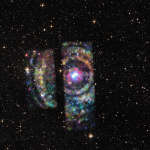
Circinus X-1 is an X-ray binary star known for its erratic variability. In the bizarre Circinus X-1 system, a dense neutron star, the collapsed remnant of a supernova explosion, orbits with a more ordinary stellar companion.
 IC 5070: A Dusty Pelican in the Swan
19.11.2016
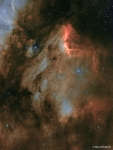
The recognizable profile of the Pelican Nebula soars nearly 2,000 light-years away in the high flying constellation Cygnus, the Swan. Also known as IC 5070, this interstellar cloud of gas and dust...
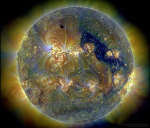 Venus and the Triply Ultraviolet Sun
4.02.2018
An unusual type of solar eclipse occurred in 2012. Usually it is the Earth's Moon that eclipses the Sun. That year, most unusually, the planet Venus took a turn. Like a solar eclipse by the Moon, the phase of Venus became a continually thinner crescent as Venus became increasingly better aligned with the Sun.
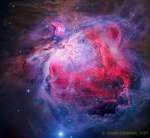 M42: Inside the Orion Nebula
30.10.2019
The Great Nebula in Orion, an immense, nearby starbirth region, is probably the most famous of all astronomical nebulas. Here, glowing gas surrounds hot young stars at the edge of an immense interstellar molecular cloud only 1500 light-years away.
|
January February |
|||||||||||||||||||||||||||||||||||||||||||||||||