
|
You entered: NASA
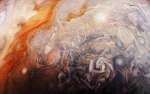 Painting with Jupiter
6.04.2018
Brush strokes of Jupiter's signature atmospheric bands and vortices form this planetary post-impressionist work of art. The creative image uses actual data from the Juno spacecraft's JunoCam. To paint on the digital canvas, a image with light and dark tones was chosen for processing and an oil-painting software filter applied.
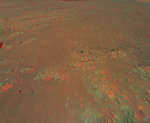 Jezero Crater: Raised Ridges in 3D
6.08.2021
Get out your red-blue glasses and hover over the surface of Mars. Taken on July 24, the 3D color view is from the Mars Ingenuity Helicopter's 10th flight above the Red Planet.
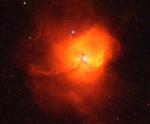 N81: Starbirth in the SMC
27.07.1998
A very young star cluster has been discovered in a neighboring galaxy. The stars found in this cluster, dubbed N81, are so young and massive that they furiously eject matter and light up the surrounding nebula. The ejected stellar winds combine and interact to sculpt beautiful and complex structures.
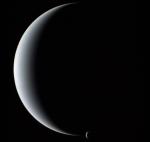 Crescent Neptune and Triton
19.06.2001
Gliding silently through the outer Solar System, the Voyager 2 spacecraft camera captured Neptune and Triton together in crescent phase in 1989. The above picture of the gas giant planet and its cloudy moon was taken from behind just after closest approach.
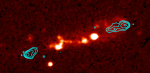 An Energetic Radio Galaxy
29.09.1995
The radio and optical emission seen in the above superposed images of the radio galaxy 3C368 indicate that energetic processes are at work. A radio galaxy is a galaxy that is visible to radio telescopes. A large radio signal usually indicates very powerful phenomena.
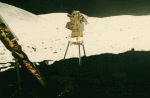 The First Lunar Observatory
8.06.1996
The first and only lunar astronomical observatory was deployed by the Apollo 16 crew in 1972. The Far Ultraviolet Camera / Spectrograph used a 3-inch diameter telescope to photograph the Earth, various nebulae, star clusters, and the Large Magellanic Cloud.
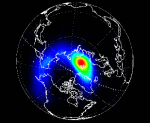 X-Ray Earth
29.12.1996
The Earth glows in many kinds of light, including the energetic X-ray band. Actually, the Earth itself does not glow - only aurora produced high in the Earth's atmosphere. Above is the first picture of the Earth in X-rays, taken in March with the orbiting Polar satellite. Bright X-ray emission is shown in red.
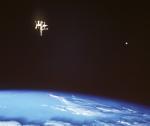 The Moons Of Earth
13.08.1998
While orbiting the planet during their June 1998 mission, the crew of the Space Shuttle Discovery photographed this view of two moons of Earth. Thick storm clouds are visible in the lovely blue planet...
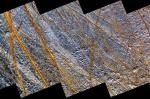 Plains and Ridges on Europa
14.12.1998
The ridges on Europa may be caused by cold water volcanoes. Europa, one of the largest moons of Jupiter, has been the source of intense scrutiny since speculation increased of there being oceans beneath its icy surface.
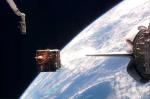 Deploying Spartan
12.08.1999
Last October the Space Shuttle Discovery deployed Spartan 201, a spacecraft that monitored the corona of the Sun. Instruments on Spartan 201 were used to estimate the density of electrons emitted into the solar...
|
January February |
|||||||||||||||||||||||||||||||||||||||||||||||||