
|
You entered: nebula
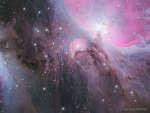 M43: Streams of Orion
6.10.2021
Where do the dark streams of dust in the Orion Nebula originate? This part of the Orion Molecular Cloud Complex, M43, is the often imaged but rarely mentioned neighbor of the more famous M42. M42, seen in part to the upper right, includes many bright stars from the Trapezium star cluster.
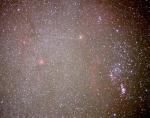 Meteor Milky Way
26.11.1998
The bold, bright star patterns of Orion (right) are a familiar sight to even casual skygazers. But this gorgeous color photo also features a subtler spectacle - the faint stars of the Milky Way.
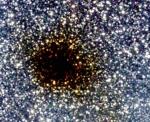 Dark Cloud
26.02.1999
Ominously foreshadowing events to come, a dark cloud of obscuring dust stands out against a luminous star field in the Milky Way. Cataloged as Feitzinger and Stuwe object "1-457" this fuliginous interstellar nebula is relatively close - possibly only 1,000 light-years distant.
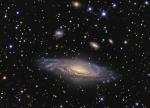 NGC 7331 and Beyond
27.07.2006
Spiral galaxy NGC 7331 is often touted as an analog to our own Milky Way. About 50 million light-years distant in the northern constellation Pegasus, NGC 7331 was recognized early on as a spiral nebula and is actually one of the brighter galaxies not included in Charles Messier's famous 18th century catalog.
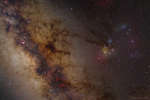 A Wide Field Image of the Galactic Center
6.01.2012
From Sagittarius to Scorpius, the central Milky Way is a truly beautiful part of planet Earth's night sky. The gorgeous region is captured in this wide field image spanning about 30 degrees.
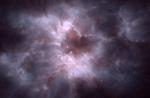 NGC 2440: Cocoon of a New White Dwarf
3.07.1999
Like a butterfly, a white dwarf star begins its life by casting off a cocoon that enclosed its former self. In this analogy, however, the Sun would be a caterpillar and the ejected shell of gas would become the prettiest of all!
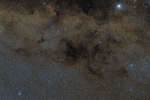 Rigil Kentaurus and Sandqvist 169
13.04.2019
Rigil Kentaurus is the bright star near the top of this broad southern skyscape. Of course it's probably better known as Alpha Centauri, nearest star system to the Sun. Below it sprawls a dark nebula complex.
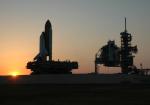 Discovery in Motion
8.07.2006
On July 4th, the space shuttle orbiter Discovery rocketed into space on mission STS-121. Now docked with the International Space Station, Discovery orbits planet Earth at about 27 thousand kilometers per hour.
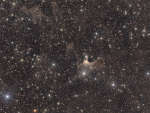 Haunting the Cepheus Flare
30.10.2008
Spooky shapes seem to haunt this starry expanse, drifting through the night in the royal constellation Cepheus. Of course, the shapes are cosmic dust clouds faintly visible in dimly reflected starlight. Far from your...
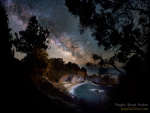 Galaxy Cove Vista
7.05.2013
To see a vista like this takes patience, hiking, and a camera. Patience was needed in searching out just the right place and waiting for just the right time. A short hike was needed to reach this rugged perch above a secluded cove in Julia Pfeiffer Burns State Park in California, USA.
|
January February |
|||||||||||||||||||||||||||||||||||||||||||||||||