
|
You entered: crescent
 The Medusa Nebula
25.10.2012
Braided, serpentine filaments of glowing gas suggest this nebula's popular name, The Medusa Nebula. Also known as Abell 21, this Medusa is an old planetary nebula some 1,500 light-years away in the constellation Gemini. Like its mythological namesake, the nebula is associated with a dramatic transformation.
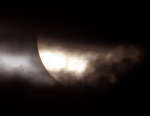 Mercurys Transit: An Unusual Spot on the Sun
24.08.2014
What's that dot on the Sun? If you look closely, it is almost perfectly round. The dot is the result of an unusual type of solar eclipse that occurred in 2006. Usually it is the Earth's Moon that eclipses the Sun. This time, the planet Mercury took a turn.
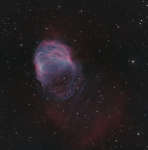 The Medusa Nebula
17.03.2023
Braided and serpentine filaments of glowing gas suggest this nebula's popular name, The Medusa Nebula. Also known as Abell 21, this Medusa is an old planetary nebula some 1,500 light-years away in the constellation Gemini. Like its mythological namesake, the nebula is associated with a dramatic transformation.
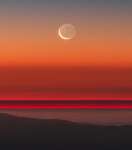 Old Moon in the New Moon s Arms
20.01.2018
Also known as the Moon's "ashen glow" or the "Old Moon in the New Moon's arms", earthshine is earthlight reflected from the Moon's night side. This stunning image of earthshine from a young crescent moon was taken from Las Campanas Observatory, Atacama Desert, Chile, planet Earth near moonset on January 18.
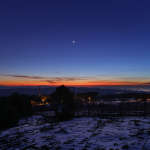 Twilight with Moon and Planets
21.02.2026
Only two days after the February New Moon's annular eclipse of the Sun, a slender lunar crescent poses above the western horizon after sunset in this wintry twilight skyscape. Its nightside faintly illuminated...
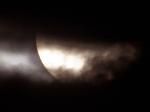 Mercurys Transit: An Unusual Spot on the Sun
14.11.2006
What's that dot on the Sun? If you look closely, it is almost perfectly round. The dot is the result of an unusual type of solar eclipse that occurred last week. Usually it is the Earth's Moon that eclipses the Sun.
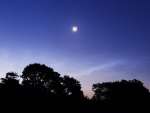 Night Shinings
2.07.2008
In the early morning hours of June 30th, ghostly clouds hovered in the east in this view of near dawn skies over western France. The noctilucent or night-shining clouds lie near the edge of space, reflecting sunlight from about 80 kilometers above Earth's surface.
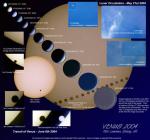 A Rare Annular Venusian Solar Eclipse
15.06.2004
An unusual type of solar eclipse occurred last week. Usually it is the Earth's Moon that eclipses the Sun. Last week, for the first time in over 100 years, the planet Venus took a turn.
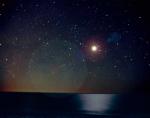 1006 AD: Supernova in the Sky
30.04.2006
A new star, likely the brightest supernova in recorded human history, appeared in planet Earth's sky about 1,000 years ago today, in 1006 AD. The expanding debris cloud from the stellar explosion is still visible to modern astronomers, but what did the supernova look like in 1006?
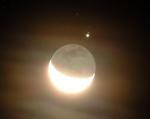 Jupiter and the Moon s Shadowed Horizon
9.12.2004
Early Tuesday morning, December 7th, June Croft thought the southeastern sky above Atmore, Alabama, USA was beautiful. Watching the Moon rise through gossamer clouds, she noted, " ... the crescent Moon looked like it was held in the sky by a star just off its shadowed horizon." What was that star?
|
January February March April May June July August |
||||||||||||||||||||||||||||||||||||||||||||||||||||||||