
|
You entered: dark
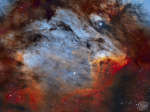 The Pelican Nebula in Gas, Dust, and Stars
24.09.2019
The Pelican Nebula is slowly being transformed. IC 5070, the official designation, is divided from the larger North America Nebula by a molecular cloud filled with dark dust. The Pelican, however, receives much study because it is a particularly active mix of star formation and evolving gas clouds.
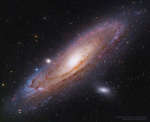 M31: The Andromeda Galaxy
18.01.2022
The most distant object easily visible to the unaided eye is M31, the great Andromeda Galaxy. Even at some two and a half million light-years distant, this immense spiral galaxy -- spanning over 200,000 light years -- is visible, although as a faint, nebulous cloud in the constellation Andromeda.
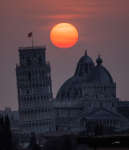 Leaning Tower, Active Sun
31.03.2022
The natural filter of a hazy atmosphere offered this recognizable architecture and sunset view on March 27. Dark against the solar disk, large sunspots in solar active regions 2975 and 2976 are wedged between the Duomo of Pisa and its famous Leaning Tower.
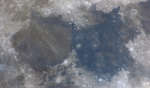 APOD: 2026 July 25 Б Tranquility and Serenity
24.07.2026
The Seas of Tranquility and Serenity are calm today. They're calm most every day though, since they are actually lunar maria, ancient lava flows filling in large impact basins on the Moon. Also...
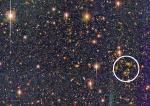 Weighing Empty Space
8.07.2002
Sometimes staring into empty space is useful. Pictured above is a region of sky that was picked because it had, well, nothing: no bright stars, no bright galaxies, and no picturesque nebulas. What could not be avoided, however, were a few stars in our own Galaxy, and many distant galaxies strewn across the universe.
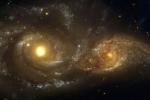 Spiral Galaxies in Collision
8.11.1999
Billions of years from now, only one of these two galaxies will remain. Until then, spiral galaxies NGC 2207 and IC 2163 will slowly pull each other apart, creating tides of matter, sheets of shocked gas, lanes of dark dust, bursts of star formation, and streams of cast-away stars.
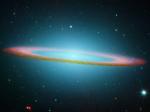 The Sombrero Galaxy in Infrared
11.05.2005
This floating ring is the size of a galaxy. In fact, it is part of the photogenic Sombrero Galaxy, one of the largest galaxies in the nearby Virgo Cluster of Galaxies. The dark band of dust that obscures the mid-section of the Sombrero Galaxy in optical light actually glows brightly in infrared light.
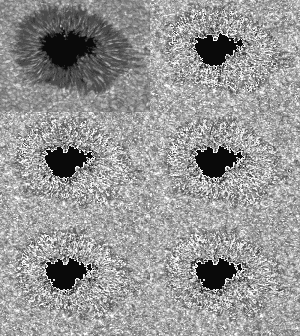 Sunspot Seething
22.02.2000
Our Sun's surface is continually changing. This time-lapse movie shows in five seconds what happens in 20 minutes on the Sun's surface near a sunspot. Visible is boiling granulation outside the sunspot...
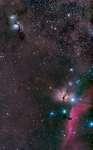 Orion s Belt Continued
10.02.2009
Yesterday's skyscape featured Alnitak, Alnilam, and Mintaka, the stars of Orion's Belt. Today's also presents the easternmost belt star, Alnitak, at the bottom right of the field, surrounded by the well-known Horsehead and Flame nebulae.
 Meteor by Moonlight
15.08.2009
Dark skies are favored for viewing meteor showers. But the annual Perseid Meteor Shower still entertained skygazers around the world this week even though the Moon brightened the night. At its last quarter phase...
|
January February March April May June July August September |
|||||||||||||||||||||||||||||||||||||||||||||||||