
|
You entered: satellite
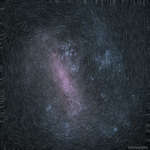 Rotation of the Large Magellanic Cloud
16.05.2018
This image is not blurry. It shows in clear detail that the largest satellite galaxy to our Milky Way, the Large Cloud of Magellan (LMC), rotates. First determined with Hubble, the rotation of the LMC is presented here with fine data from the Sun-orbiting Gaia satellite.
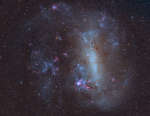 The Large Cloud of Magellan
5.09.2019
The 16th century Portuguese navigator Ferdinand Magellan and his crew had plenty of time to study the southern sky during the first circumnavigation of planet Earth. As a result, two fuzzy cloud-like objects easily...
 APOD: 2023 July 2 Б Milky Way and Aurora over Antarctica
2.07.2023
It was one of the better skies of this long night. In parts of Antarctica, not only is it winter, but the Sun can spend weeks below the horizon. At China's Zhongshan Station, people sometimes venture out into the cold to photograph a spectacular night sky.
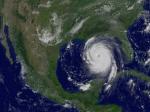 Hurricane Katrina in the Gulf of Mexico
29.08.2005
Where will Hurricane Katrina go? One of the stronger storm systems of modern times appears headed for landfall somewhere in the southern USA sometime today. Katrina was designated yesterday a rare Category 5 Hurricane, the strongest designation for a storm on Earth, and one that indicates sustained winds greater than 250 kilometers per hour.
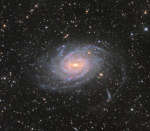 Spiral Galaxy NGC 6744
5.12.2019
Beautiful spiral galaxy NGC 6744 is nearly 175,000 light-years across, larger than our own Milky Way. It lies some 30 million light-years distant in the southern constellation Pavo and appears as only a faint, extended object in small telescopes.
 Curly Spiral Galaxy M63
19.05.2023
A bright spiral galaxy of the northern sky, Messier 63 is nearby, about 30 million light-years distant toward the loyal constellation Canes Venatici. Also cataloged as NGC 5055, the majestic island universe is nearly 100,000 light-years across, about the size of our own Milky Way.
 The Race to Reveal Our Universe
9.05.2000
A race is underway to understand our universe through background radiation produced during its infancy. Observationally, increasingly accurate balloon experiments are pressing to beat future space-faring satellites to definitive measurements of universe-determining spot characteristics of the cosmic microwave background (CMB) radiation.
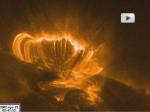 An X Class Flare Region on the Sun
6.11.2007
Why does the Sun flare? Unpredictably, our Sun unleashes tremendous flares expelling hot gas into the Solar System that can affect satellites, astronauts, and power grids on Earth. This close up of an active region on the Sun that produced a powerful X-class flare was captured by the orbiting TRACE satellite.
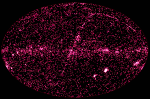 Exploring The Universe With IUE (1978-1996)
30.09.1996
How do planets, stars, and galaxies form? How do they evolve? The International Ultraviolet Explorer (IUE) satellite was launched in 1978 and operated by NASA/ ESA/ PPARC to help provide answers to some of the most fundamental questions about the contents of our universe.
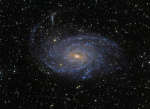 Spiral Galaxy NGC 6744
10.08.2018
Beautiful spiral galaxy NGC 6744 is nearly 175,000 light-years across, larger than our own Milky Way. It lies some 30 million light-years distant in the southern constellation Pavo and appears as only a faint, extended object in small telescopes. We see the disk of the nearby island universe tilted towards our line of sight.
|
January February March April May June July August September October |
|||||||||||||||||||||||||||||||||||||||||||||||||