
|
You entered: nearest stars
 The 25 Brightest Stars in the Night Sky
18.12.2022
Do you know the names of some of the brightest stars? It's likely that you do, even though some bright stars have names so old they date back to near the beginning of written language.
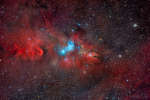 Fox Fur, Unicorn, and Christmas Tree
26.12.2020
Clouds of glowing hydrogen gas fill this colorful skyscape in the faint but fanciful constellation Monoceros, the Unicorn. A star forming region cataloged as NGC 2264, the complex jumble of cosmic gas and dust...
 APOD: 2025 June 11 Б 25 Brightest Stars in the Night Sky
11.06.2025
Do you know the names of some of the brightest stars? It's likely that you do, even though some bright stars have names so old they date back to near the beginning of written language.
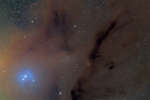 Streaming Dark Nebulas near B44
15.06.2009
Dark dust lit by the bright yellow star Antares highlight this photogenic starscape of the southern sky. A wider angle image shows the central band of our Milky Way Galaxy connected to Antares by streams of dust knows as the Dark River. At the head of the Dark River the dust appears in dense knots.
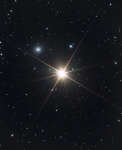 Mirach s Ghost
27.10.2017
As far as ghosts go, Mirach's Ghost isn't really that scary. Mirach's Ghost is just a faint, fuzzy galaxy, well known to astronomers, that happens to be seen nearly along the line-of-sight to Mirach, a bright star. Centered in this star field, Mirach is also called Beta Andromedae.
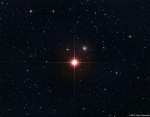 Mirach s Ghost
28.10.2021
As far as ghosts go, Mirach's Ghost isn't really that scary. Mirach's Ghost is just a faint, fuzzy galaxy, well known to astronomers, that happens to be seen nearly along the line-of-sight to Mirach, a bright star. Centered in this star field, Mirach is also called Beta Andromedae.
 Mirach s Ghost
28.10.2010
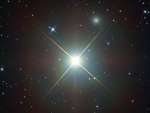
As far as ghosts go, Mirach's Ghost isn't really that scary. In fact, Mirach's Ghost is just a faint, fuzzy galaxy, well known to astronomers, that happens to be seen nearly along the line-of-sight to Mirach, a bright star. Centered in this star field, Mirach is also called Beta Andromedae.
 Mirach s Ghost
29.10.2008
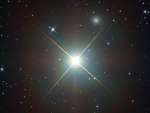
As far as ghosts go, Mirach's Ghost isn't really that scary. In fact, Mirach's Ghost is just a faint, fuzzy galaxy, well known to astronomers, that happens to be seen nearly along the line-of-sight to Mirach, a bright star. Centered in this star field, Mirach is also called Beta Andromedae.
 HCG 87: A Small Group of Galaxies
9.08.2015
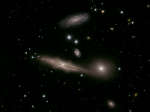
Sometimes galaxies form groups. For example, our own Milky Way Galaxy is part of the Local Group of Galaxies. Small, compact groups, like Hickson Compact Group 87 (HCG 87) shown above, are interesting partly because they slowly self-destruct.
 The Cats Eye Nebula in Optical and Xray
1.05.2019
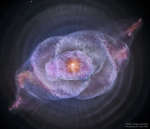
To some it looks like a cat's eye. To others, perhaps like a giant cosmic conch shell. It is actually one of brightest and most highly detailed planetary nebula known, composed of gas expelled in the brief yet glorious phase near the end of life of a Sun-like star.
|
January February March April May June July August September October |
|||||||||||||||||||||||||||||||||||||||||||||||||