
|
You entered: galaxy center
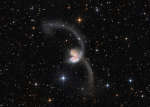 Exploring the Antennae
31.03.2022
Some 60 million light-years away in the southerly constellation Corvus, two large galaxies are colliding. Stars in the two galaxies, cataloged as NGC 4038 and NGC 4039, very rarely collide in the course of the ponderous cataclysm that lasts for hundreds of millions of years.
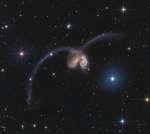 Exploring the Antennae
28.04.2017
Some 60 million light-years away in the southerly constellation Corvus, two large galaxies are colliding. Stars in the two galaxies, cataloged as NGC 4038 and NGC 4039, very rarely collide in the course of the ponderous cataclysm that lasts for hundreds of millions of years.
 Saturn and Mars visit Milky Way Star Clouds
10.05.2016
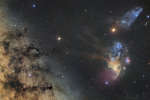
Planets, stars, nebulas and a galaxy -- this impressive image has them all. Closest to home are the two planets Mars (right) and Saturn (center), visible as the two bright orange spots in the upper half of the featured image.
 Canis Major Dwarf: A New Closest Galaxy
17.11.2003
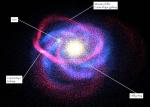
What is the closest galaxy to the Milky Way? The new answer to this old question is the Canis Major dwarf galaxy. For many years astronomers thought the Large Magellan Cloud (LMC) was closest, but its title was supplanted in 1994 by the Sagittarius dwarf galaxy.
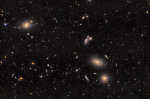 Virgo Cluster Galaxies
10.10.2020
Galaxies of the Virgo Cluster are scattered across this deep telescopic field of view. The cosmic scene spans about three Full Moons, captured in dark skies near Jalisco, Mexico, planet Earth. About 50 million light-years distant, the Virgo Cluster is the closest large galaxy cluster to our own local galaxy group.
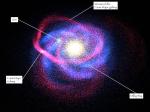 The Closest Galaxy: Canis Major Dwarf
4.11.2007
What is the closest galaxy to the Milky Way? The new answer to this old question is the Canis Major dwarf galaxy. For many years astronomers thought the Large Magellan Cloud (LMC) was closest, but its title was supplanted in 1994 by the Sagittarius dwarf galaxy.
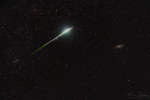 Island Universe, Cosmic Sand
14.08.2021
Stars in our own Milky Way Galaxy are scattered through this eye-catching field of view. From the early hours after midnight on August 13, the 30 second exposure of the night sky over Busko-Zdroj, Poland records the colorful and bright trail of a Perseid meteor.
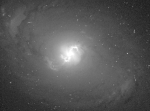 NGC 3393: A Super Spiral?
4.08.1996
A bird? A plane? No, but pictured here is something physically much larger, flying much higher, and moving much faster than either of these. It is, in fact, a Seyfert type 2 spiral galaxy. The "S" is actually a lane of stars, gas and dust circling the core.
 The Stars of NGC 300
16.04.2004
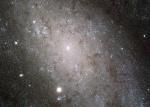
Like grains of sand on a cosmic beach, individual stars of large spiral galaxy NGC 300 are resolved in this sharp image from the Hubble Space Telescope's Advanced Camera for Surveys (ACS).
 Northern Cygnus
20.09.2007
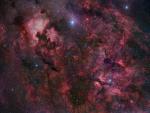
Bright, hot, supergiant star Deneb lies at top center in this gorgeous skyscape. The 20 frame mosaic spans an impressive 12 degrees across the northern end of Cygnus the Swan. Crowded with stars...
|
January February March April May June July August |
||||||||||||||||||||||||||||||||||||||||||||||||||||||||