
|
You entered: surface gravity
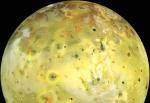 Io in True Color
15.07.2001
The strangest moon in the Solar System is bright yellow. This picture, showing Io's true colors, was taken in 1999 July by the Galileo spacecraft currently orbiting Jupiter. Io's colors derive from sulfur and molten silicate rock. The unusual surface of Io is kept very young by its system of active volcanoes.
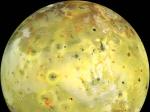 Io in True Color
2.05.2004
The strangest moon in the Solar System is bright yellow. This picture, showing Io's true colors, was taken in 1999 July by the Galileo spacecraft that orbited Jupiter from 1995 to 2003. Io's colors derive from sulfur and molten silicate rock.
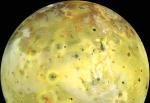 Io in True Color
20.09.1999
The strangest moon in the Solar System is bright yellow. This recently released picture, showing Io's true colors, was taken in July by the Galileo spacecraft currently orbiting Jupiter. Io's colors derive from sulfur and molten silicate rock. The unusual surface of Io is kept very young by its system of active volcanoes.
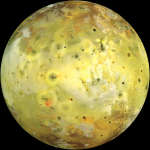 Io in True Color
3.10.2010
The strangest moon in the Solar System is bright yellow. This picture, an attempt to show how Io would appear in the "true colors" perceptible to the average human eye, was taken in 1999 July by the Galileo spacecraft that orbited Jupiter from 1995 to 2003.
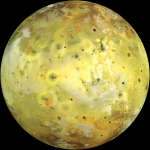 Io in True Color
30.03.2014
The strangest moon in the Solar System is bright yellow. This picture, an attempt to show how Io would appear in the "true colors" perceptible to the average human eye, was taken in 1999 July by the Galileo spacecraft that orbited Jupiter from 1995 to 2003.
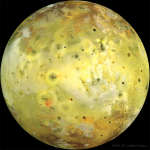 APOD: 2026 January 20 Б Io in True Color
20.01.2026
The strangest moon in the Solar System is bright yellow. The featured picture, an attempt to show how Io would appear in the "true colors" perceptible to the average human eye, was taken in 1999 July by the Galileo spacecraft that orbited Jupiter from 1995 to 2003.
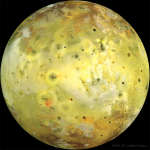 Io in True Color
11.12.2022
The strangest moon in the Solar System is bright yellow. The featured picture, an attempt to show how Io would appear in the "true colors" perceptible to the average human eye, was taken in 1999 July by the Galileo spacecraft that orbited Jupiter from 1995 to 2003.
 April Fools Day More Intense On Mars
1.04.2004
Today, April 1st, astrophysicists have announced a surprising discovery - April Fools Day is more intense on Mars! Though the discovery is contrary to accepted theories of April Fools Day, researchers note that there are several likely causes for the severe martian April Fools phenomenon.
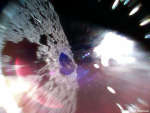 Rover 1A Hops on Asteroid Ryugu
24.09.2018
Two small robots have begun hopping around the surface of asteroid Ryugu. The rovers, each the size of a small frying pan, move around the low gravity of kilometer-sized 162173 Ryugu by hopping, staying aloft for about 15 minutes and typically landing again several meters away.
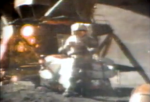 Hammer Versus Feather on the Moon
1.11.2011
If you drop a hammer and a feather together, which reaches the ground first? On the Earth, it's the hammer, but is the reason only because of air resistance? Scientists even before Galileo have pondered and tested this simple experiment and felt that without air resistance, all objects would fall the same way.
|
January February March April May June July August September October |
|||||||||||||||||||||||||||||||||||||||||||||||||