
|
You entered: ring
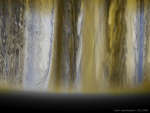 Jupiters Clouds from New Horizons
26.06.2016
The New Horizons spacecraft took some stunning images of Jupiter on its way out to Pluto. Famous for its Great Red Spot, Jupiter is also known for its regular, equatorial cloud bands, visible through even modest sized telescopes.
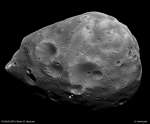 Phobos from Mars Express
17.03.2010
Why is this small object orbiting Mars? The origin of Phobos, the larger of the two moons orbiting Mars, remains unknown. Phobos and Deimos appear very similar to C-type asteroids, yet gravitationally capturing such asteroids, circularizing their orbits, and dragging them into Mars' equatorial plane seems unlikely.
 The Milky Way Over Tenerife
5.04.2011
Have you ever seen the band of our Milky Way Galaxy? Chances are you have never seen it like this -- nor could you. In a clear sky from a dark location at the right time, a faint band of light is visible across the sky. This band is the disk of our spiral galaxy.
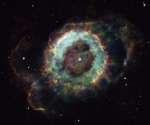 NGC 6369: The Little Ghost Nebula
14.01.2012
This pretty planetary nebula, cataloged as NGC 6369, was discovered by 18th century astronomer William Herschel as he used a telescope to explore the medicinal constellation Ophiucus. Round and planet-shaped, the nebula is also relatively faint and has acquired the popular moniker of Little Ghost Nebula.
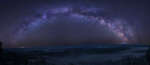 A Graceful Arc
25.12.2009
The graceful arc of the Milky Way begins and ends at two mountain peaks in this solemn night sky panorama. Created from a 24 frame mosaic, exposures tracking Earth and sky were made separately...
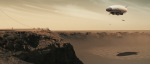 Wanderers
29.04.2018
How far out will humanity explore? If this video's fusion of real space imagery and fictional space visualizations is on the right track, then at least the Solar System. Some of the video...
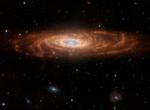 NGC 7331: A Galaxy So Inclined
1.07.2004
If our own Milky Way galaxy were 50 million light-years away with its disk inclined slightly to our line of sight, it would look a lot like large spiral galaxy NGC 7331. In fact...
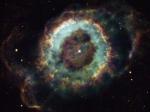 NGC 6369: The Little Ghost Nebula
7.02.2004
This pretty planetary nebula, cataloged as NGC 6369, was discovered by 18th century astronomer William Herschel as he used a telescope to explore the medicinal constellation Ophiucus. Round and planet-shaped, the nebula is also relatively faint and has acquired the popular moniker of Little Ghost Nebula.
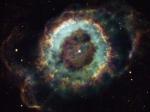 NGC 6369: The Little Ghost Nebula
8.11.2002
This pretty planetary nebula, cataloged as NGC 6369, was discovered by 18th century astronomer William Herschel as he used a telescope to explore the constellation Ophiucus. Round and planet-shaped, the nebula is also relatively faint and has acquired the popular moniker of Little Ghost Nebula.
 Wanderers
7.12.2014
How far out will humanity explore? If this video's fusion of real space imagery and fictional space visualizations is on the right track, then at least the Solar System. Some of the video...
|
January February March April May June July August |
||||||||||||||||||||||||||||||||||||||||||||||||||||||||