
|
You entered: star system
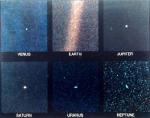 Our Solar System from Voyager
17.05.1998
After taking spectacular pictures of our Solar System's outer planets, Voyager 1 looked back at six planets to take our Solar System's first family portrait. Here Venus, Earth, Jupiter, Saturn, Uranus, and Neptune, were all visible across the sky.
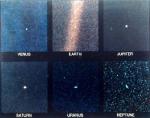 Our Solar System from Voyager
14.12.1996
After taking spectacular pictures of our Solar System's outer planets, Voyager 1 looked back at six planets to take our Solar System's first family portrait. Here Venus, Earth, Jupiter, Saturn, Uranus, and Neptune, were all visible across the sky.
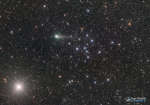 Comet C 2017 K2 (PanSTARRS)
30.06.2022
Imaged on June 20 2022, comet C/2017 K2 (PanSTARRS) shares this wide telescopic field of view with open star cluster IC 4665 and bright star Beta Ophiuchi, near a starry edge of the Milky Way.
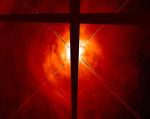 AB Aurigae: How To Make Planets
8.02.2003
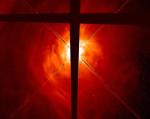
This enhanced Hubble Space Telescope image shows in remarkable detail the inner portion of the disk of dust and gas surrounding the star AB Aurigae. Knots of material, visible here for the first time...
 AB Aurigae: How To Make Planets
11.06.1999
This enhanced Hubble Space Telescope image shows in remarkable detail the inner portion of the disk of dust and gas surrounding the star AB Aurigae. Knots of material, visible here for the first time...
 Two Rings for Asteroid Chariklo
9.04.2014
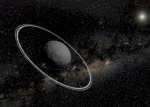
Asteroids can have rings. In a surprising discovery announced two weeks ago, the distant asteroid 10199 Chariklo was found to have at least two orbiting rings. Chariklo's diameter of about 250 kilometers makes it the largest of the measured centaur asteroids, but now the smallest known object to have rings.
 APOD: 2025 November 3 Б A Double Helix Lunar Eclipse
3.11.2025
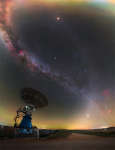
The image was timed to capture a total lunar eclipse -- but it came with quite a twist. First, the eclipse: the fully Earth-shadowed Moon is visible as the orange orb near the top.
 SOHO: Comet McNaught Movie
20.01.2007
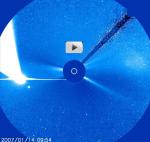
This frame from a spectacular time lapse movie shows Comet McNaught - the Great Comet of 2007 - sweeping through the inner solar system. The movie frames were recorded from January 12 through Jan 16 by a coronograph onboard the sun-staring SOHO spacecraft.
 Comet Stonehouse
14.05.1998
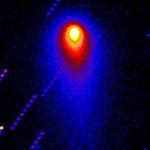
Comets move against a field of background stars. Their apparent motion is slow but carefull tracking reveals their orbits, allowing these visitors to the inner solar system to be identified as old or new acquaintances. Recently a new comet, designated 1998 H1, was discovered by observer Patrick L.
 Three Worlds for TRAPPIST 1
7.05.2016
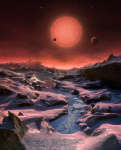
Three new found worlds orbit the ultracool dwarf star TRAPPIST-1, a mere 40 light-years away. Their transits were first detected by the Belgian robotic TRAnsiting Planets and Planetesimals Small Telescope, TRAPPIST, at ESO's La Silla Observatory in Chile. The newly discovered exoplanets are all similar in size to Earth.
|
January February March April May June |
|||||||||||||||||||||||||||||||||||||||||||||||||