
|
You entered: galaxy cluster
 Spiral Galaxy NGC 2841
23.03.2023
A mere 46 million light-years distant, spiral galaxy NGC 2841 can be found in planet Earth's night sky toward the northern constellation of Ursa Major. This sharp image centered on the gorgeous island universe also captures spiky foreground Milky Way stars and more distant background galaxies within the same telescopic field of view.
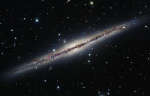 At the Edge of NGC 891
26.05.2012
This sharp cosmic portrait features NGC 891. The spiral galaxy spans about 100 thousand light-years and is seen almost exactly edge-on from our perspective. In fact, about 30 million light-years distant in the constellation Andromeda, NGC 891 looks a lot like our Milky Way.
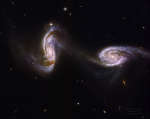 Arp 240: A Bridge between Spiral Galaxies from Hubble
28.11.2016
Why is there a bridge between these two spiral galaxies? Made of gas and stars, the bridge provides strong evidence that these two immense star systems have passed close to each other and experienced violent tides induced by mutual gravity.
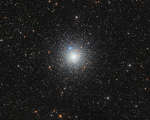 Globular Star Cluster NGC 6752
23.01.2020
Some 13,000 light-years away toward the southern constellation Pavo, the globular star cluster NGC 6752 roams the halo of our Milky Way galaxy. Over 10 billion years old, NGC 6752 follows clusters Omega Centauri and 47 Tucanae as the third brightest globular in planet Earth's night sky.
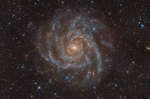 IC 342: Hidden Galaxy in Camelopardalis
8.01.2026
Similar in size to large, bright spiral galaxies in our neighborhood, IC 342 is a mere 10 million light-years distant toward the long-necked, northern constellation Camelopardalis. A sprawling island universe, IC 342 would otherwise...
 IC 342: Hidden Galaxy in Camelopardalis
22.11.2023
Similar in size to large, bright spiral galaxies in our neighborhood, IC 342 is a mere 10 million light-years distant in the long-necked, northern constellation Camelopardalis. A sprawling island universe, IC 342 would otherwise...
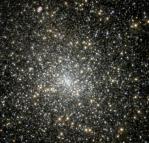 M15: Dense Globular Star Cluster
4.08.2000
Life might get dull at the core of M15 but the sky would always be bright with stars! In fact, only 40,000 light-years away in the constellation Pegasus, M15 is one of the most densely packed globular star clusters in our Milky Way Galaxy.
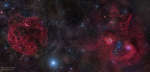 Downtown Auriga
13.02.2014
Rich in star clusters and nebulae, the ancient constellation of Auriga, the Charioteer, rides high in northern winter night skies. Spanning nearly 24 full moons (12 degrees) on the sky, this deep telescopic mosaic view recorded in January shows off some of Auriga's most popular sights for cosmic tourists.
 Globular Star Cluster NGC 6752
25.10.2024
Some 13,000 light-years away toward the southern constellation Pavo, the globular star cluster NGC 6752 roams the halo of our Milky Way galaxy. Over 10 billion years old, NGC 6752 follows clusters Omega Centauri, 47 Tucanae, and Messier 22 as the fourth brightest globular in planet Earth's night sky.
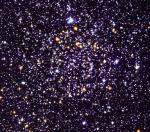 NGC 7789: Galactic Star Cluster
9.07.1999
At 1.6 billion years old, this cluster of stars is beginning to show its age. NGC 7789 is an open or galactic star cluster about 8,000 light-years distant toward the constellation Cassiopeia and lies near the plane of our Milky Way galaxy.
|
January February March April May |
|||||||||||||||||||||||||||||||||||||||||||||||||