
|
You entered: space weather
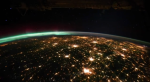 Around the World in 90 Minutes
21.11.2011
What is it like to circle the Earth? Every 90 minutes, astronauts aboard the International Space Station experience just that. Recently, crew members took a series of light-sensitive videos looking down at night that have been digitally fused to produce the above time-lapse video.
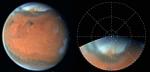 The Martian Spring
3.11.1996
As spring comes to the northern latitudes of Mars, increased solar heating brings warmth and a change in the weather. The winds produced by the large temperature differences between the receding polar...
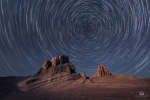 Star Trails for a Red Planet
29.11.2019
Does Mars have a north star? In long exposures of Earth's night sky, star trails make concentric arcs around the north celestial pole, the direction of our fair planet's axis of rotation. Bright star Polaris is presently the Earth's North Star, close on the sky to Earth's north celestial pole.
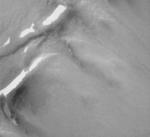 Ski Mars
1.04.1999
These brightly reflecting fields of snow or frost are on the slopes of a crater rim in the northern hemisphere of Mars. They are 500 meters or so long and have lasted through about eight months of the Red Planet's spring and summer weather.
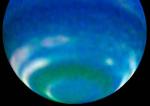 Neptune: Still Springtime After All These Years
13.06.2003
In the 1960s spring came to the southern hemisphere of Neptune, the Solar System's outermost gas giant planet. Of course, since Neptune orbits the Sun once every 165 earth-years, it's still spring for southern Neptune, where each season lasts over four decades.
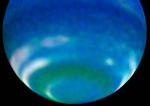 Neptune: Still Springtime After All These Years
26.06.2004
In the 1960s spring came to the southern hemisphere of Neptune, the Solar System's outermost gas giant planet. Of course, since Neptune orbits the Sun once every 165 earth-years, it's still springtime for southern Neptune, where each season lasts over four decades.
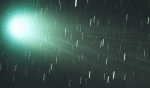 Comet Hyakutake's Closest Approach
23.03.1996
The above true color image of Comet Hyakutake was taken the night of March 21/22. Tonight, Comet Hyakutake will make its nearest approach to Earth, closing to a mere 10 million miles as it passes over the planet's Northern Hemisphere.
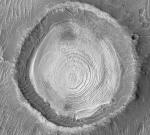 Sedimentary Mars
15.08.2003
High-resolution imaging of an area in the Schiaparelli Basin of Mars on June 3 by the MGS Mars Orbiter camera produced this stunning example of layered formations within an old impact crater. On planet...
 The Clouds of Neptune
7.05.1996
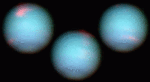
These Hubble Space Telescope (HST) images reveal glimpses of the dynamic atmosphere of Neptune, the Solar System's most distant gas giant planet. The first close-up of Neptune's clouds was provided by NASA's Voyager 2 spacecraft during its August 1989 flyby, giving a tantalizingly brief look.
 A Frosty Crater On Mars
30.11.2000
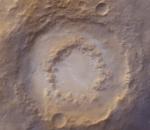
In the martian southern hemisphere, autumn has arrived. As on planet Earth, the cooler temperatures bring a seasonal frost to the landscape. Of course on Mars, the surface temperatures can be really cool, reaching below minus 100 degrees C.
|
January February March April May June July August September October |
|||||||||||||||||||||||||||||||||||||||||||||||||