
|
You entered: ray crater
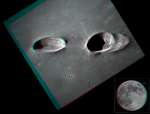 Messier Craters in Stereo
30.05.2015
Many bright nebulae and star clusters in planet Earth's sky are associated with the name of astronomer Charles Messier, from his famous 18th century catalog. His name is also given to these two large and remarkable craters on the Moon.
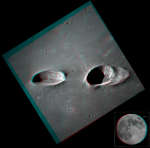 Messier Craters in Stereo
11.12.2020
Many bright nebulae and star clusters in planet Earth's sky are associated with the name of astronomer Charles Messier from his famous 18th century catalog. His name is also given to these two large and remarkable craters on the Moon.
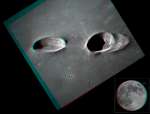 Messier Craters in Stereo
11.12.2009
Many bright nebulae and star clusters in planet Earth's sky are associated with the name of astronomer Charles Messier, from his famous 18th century catalog. His name is also given to these two large and remarkable craters on the Moon.
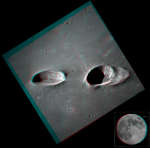 Messier Craters in Stereo
2.12.2017
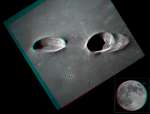
Many bright nebulae and star clusters in planet Earth's sky are associated with the name of astronomer Charles Messier, from his famous 18th century catalog. His name is also given to these two large and remarkable craters on the Moon.
 Messier Craters in Stereo
8.06.2013
Many bright nebulae and star clusters in planet Earth's sky are associated with the name of astronomer Charles Messier, from his famous 18th century catalog. His name is also given to these two large and remarkable craters on the Moon.
 Gamma Ray Burst Afterglow: Supernova Connection
5.04.2002
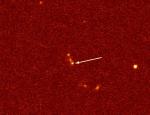
What causes the mysterious gamma-ray bursts? Indicated in this Hubble Space Telescope exposure of an otherwise unremarkable field in the constellation Crater, is the dwindling optical afterglow of a gamma-ray burst first detected by the Beppo-SAX satellite on 2001 December 11.
 Mercury as Revealed by MESSENGER
8.10.2008
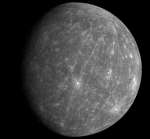
The planet Mercury has been known since history has been recorded, but parts of the Solar System's innermost planet have never been seen like this before. Two days ago the robotic MESSENGER spacecraft buzzed past Mercury for the second time and imaged terrain mapped previously only by comparatively crude radar.
 Mercury as Revealed by MESSENGER
23.07.2017
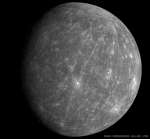
Mercury had never been seen like this before. In 2008, the robotic MESSENGER spacecraft buzzed past Mercury for the second time and imaged terrain mapped previously only by comparatively crude radar. The featured image was recorded as MESSENGER looked back 90 minutes after passing, from an altitude of about 27,000 kilometers.
 Eros At Sunset
24.08.2000
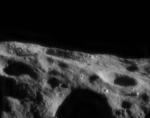
Gleaming in the rays of the setting sun, boulders litter the rugged surface of asteroid 433 Eros. The brightest boulder, at the edge of the large, shadowy crater near this picture's bottom center, is about 30 meters (100 feet) across.
 A Swift Look at Tempel 1
3.07.2005
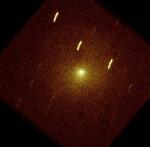
Comet Tempel 1 is targeted for a collision with the impactor probe from NASA's Deep Impact Spacecraft at about 1:52am EDT on July 4th (other time zones). Cameras on the impactor probe...
|
January February |
|||||||||||||||||||||||||||||||||||||||||||||||||