
|
You entered: southern sky
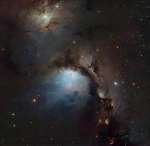 Hidden Treasures of M78
27.01.2011
M78 isn't really hiding in planet Earth's night sky. About 1,600 light-years away and nestled in the nebula rich constellation Orion, the large, bright, reflection nebula is well-known to telescopic skygazers. But this gorgeous image of M78 was selected as the winner of the Hidden Treasures 2010 astrophotography competition.
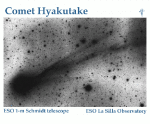 Here Comes Comet Hyakutake
13.03.1996
The reaction of ancient peoples to the appearance of bright comets has toppled empires, de-throned kings, and been taken as a sign of great things to come. Probably some of these comets did not get as bright as Comet Hyakutake ("hyah-koo-tah-kay") will in the next two weeks.
 Pleiades from Planet Earth
1.11.2025
The lovely Pleiades star cluster shines in Earth's night sky, a compact group of stars some 400 light-years distant toward the constellation Taurus and the Orion Arm of our Milky Way galaxy. Recognized since ancient times, the remarkable celestial gathering is visible to the unaided eye.
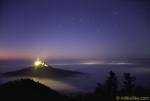 Big Dipper Castle
18.02.2005
The stars of the big dipper, a well known asterism in the constellation Ursa Major, are easy to recognize in this dramatic skyscape. In fact, northern hemisphere skygazers often follow along the line indicated by the two stars at the far right.
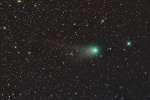 Tails of Comet Garradd
20.10.2011
A good target for binoculars and small telescopes, Comet Garradd (C/2009 P1) now shines in planet Earth's evening skies, a steady performer but just below naked-eye visibility. Telescopic images like this composite from...
 Zooming in to the Pelican Nebula
2.07.2007
Where on the sky is the Pelican Nebula? APOD features many objects on the night sky, but usually does not have the resources to show exactly where on the night sky each objects lies.
 Tentacles of the Tarantula Nebula
22.08.2007
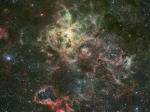
The largest, most violent star forming region known in the whole Local Group of galaxies lays in our neighboring galaxy the Large Magellanic Cloud (LMC). Were the Tarantula Nebula at the distance of the Orion Nebula -- a local star forming region -- it would take up fully half the sky.
 The Edge of Space
24.07.2021
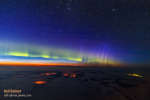
Where does space begin? For purposes of spaceflight some would say at the Karman line, currently defined as an altitude of 100 kilometers (60 miles). Others might place a line 80 kilometers (50 miles) above Earth's mean sea level.
 Tentacles of the Tarantula Nebula
18.05.2010
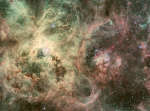
The largest, most violent star forming region known in the whole Local Group of galaxies lies in our neighboring galaxy the Large Magellanic Cloud (LMC). Were the Tarantula Nebula at the distance of the Orion Nebula -- a local star forming region -- it would take up fully half the sky.
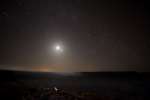 The Grand Canyon in Moonlight
30.03.2012
In this alluring night skyscape recorded on March 26, a young Moon stands over the distant western horizon in conjunction with brilliant planet Venus. In the foreground, the Colorado River glistens in moonlight as it winds through the Grand Canyon, seen from the canyon's southern rim at Lipan Point.
|
January February March April May June July August September |
|||||||||||||||||||||||||||||||||||||||||||||||||