
|
You entered: Solar System
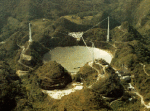 Arecibo: The Largest Telescope
29.11.1998
The Arecibo radio telescope is currently the largest single-dish telescope in the world. First opening in 1963, this 305 meter (1000 foot) radio telescope resides in a natural valley of Puerto Rico. The Arecibo telescope has been used for many astronomical research projects, including
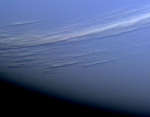 Two Hours Before Neptune
8.08.2010
Two hours before closest approach to Neptune in 1989, the Voyager 2 robot spacecraft snapped this picture. Clearly visible for the first time were long light-colored cirrus-type clouds floating high in Neptune's atmosphere. Shadows of these clouds can even be seen on lower cloud decks.
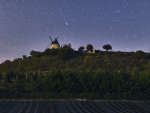 Comet Lovejoy over a Windmill
9.12.2013
Lovejoy continues to be an impressive camera comet. Pictured above, Comet C/2013 R1 (Lovejoy) was imaged above the windmill in Saint-Michel-l'Observatoire in southern France with a six-second exposure. In the foreground is a field of lavender.
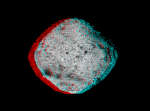 3D Bennu
11.03.2023
Put on your red/blue glasses and float next to asteroid 101955 Bennu. Shaped like a spinning toy top with boulders littering its rough surface, the tiny Solar System world is about one Empire State Building (less than 500 meters) across.
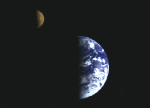 The Earth-Moon System
29.06.1995
A double planet? From 4 million miles away on December 16, 1992, NASA's robot spacecraft Galileo took this picture of the Earth-moon system. The bright, sunlit half of the Earth contrasts strongly with the darker subdued colors of the moon. Our moon is one of the largest moons in the solar system.
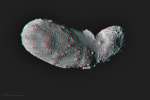 Stereo Itokawa
19.06.2010
Get out your red/blue glasses and float next to asteroid Itokawa, a diminutive world of the solar system only half a kilometer across. Boulders strewn across its rough surface and the lack of craters indicate that this asteroid is a rubble pile, formed as smaller pieces collected and were kept together by gravity.
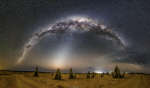 Milky Way and Zodiacal Light over Australian Pinnacles
10.10.2017
What strange world is this? Earth. In the foreground of the featured image are the Pinnacles, unusual rock spires in Nambung National Park in Western Australia. Made of ancient sea shells (limestone), how these human-sized picturesque spires formed remains a topic of research. The panorama was taken last month.
 Comet 13P Olbers
28.06.2024
Not a paradox, Comet 13P/Olbers is returning to the inner Solar System after 68 years. The periodic, Halley-type comet will reach its next perihelion or closest approach to the Sun on June 30 and has become a target for binocular viewing low in planet Earth's northern hemisphere night skies.
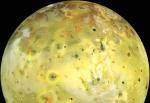 Io in True Color
15.07.2001
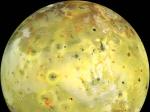
The strangest moon in the Solar System is bright yellow. This picture, showing Io's true colors, was taken in 1999 July by the Galileo spacecraft currently orbiting Jupiter. Io's colors derive from sulfur and molten silicate rock. The unusual surface of Io is kept very young by its system of active volcanoes.
 Io in True Color
2.05.2004
The strangest moon in the Solar System is bright yellow. This picture, showing Io's true colors, was taken in 1999 July by the Galileo spacecraft that orbited Jupiter from 1995 to 2003. Io's colors derive from sulfur and molten silicate rock.
|
January February March April May June July August September |
|||||||||||||||||||||||||||||||||||||||||||||||||