
|
You entered: nearest stars
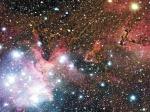 In the Center of the Heart Nebula
8.12.2004
What powers the Heart Nebula? The large emission nebula dubbed IC 1805 looks, in whole, like a human heart. The nebula glows brightly in red light emitted by its most prominent element: hydrogen. The red glow and the larger shape are all created by a small group of stars near the nebula's center.
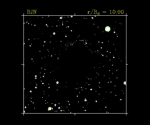 Orbiting a Black Hole
1.07.2013
What would it look like to orbit a black hole? Since the strong gravity of the black hole can significantly alter light paths, conditions would indeed look strange. For one thing, the entire sky would be visible, since even stars behind the black hole would have their light bent to the observer's eye.
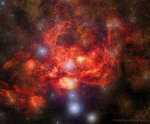 NGC 6357: The Lobster Nebula
1.11.2022
Why is the Lobster Nebula forming some of the most massive stars known? No one is yet sure. Cataloged as NGC 6357, the Lobster Nebula houses the open star cluster Pismis 24 near its center -- a home to unusually bright and massive stars.
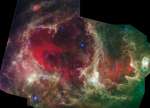 Generations of Stars in W5
29.08.2008
Giant star forming region W5 is over 200 light-years across and about 6,500 light-years away in the constellation Cassiopeia. W5's sculpted clouds of cold gas and dust seem to form fantastic shapes in this impressive mosaic of infrared images from the Spitzer Space Telescope.
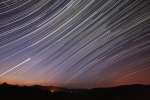 Star Trails at Dawn
8.12.2007
Just fix your camera to a tripod and you too can make an image of graceful trails traced by the stars as planet Earth rotates on its axis. Made on September 14 from Montlaux...
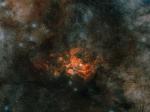 Star Forming Region NGC 6357
20.12.2006
For reasons unknown, NGC 6357 is forming some of the most massive stars ever discovered. Near the more obvious Cat's Paw nebula, NGC 6357 houses the open star cluster Pismis 24, home to these tremendously bright and blue stars.
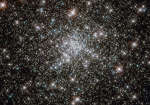 At the Core of NGC 6752
10.02.2012
This sharp Hubble Space Telescope view looks deep into NGC 6752. Some 13,000 light-years away toward the southern constellation Pavo, the globular star cluster roams the halo of our Milky Way galaxy. Over...
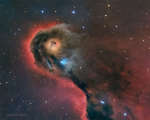 APOD: 2025 October 14 Б An Unusual Globule in IC 1396
14.10.2025
Is there a monster in IC 1396? Known to some as the Elephant's Trunk Nebula, parts of gas and dust clouds of this star formation region may appear to take on foreboding forms, some nearly human. The only real monster here, however, is a bright young star too far from Earth to hurt us.
 The Hunter s Stars
19.01.2012
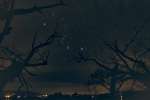
Begirt with many a blazing star, Orion, the Hunter, is one of the most easily recognizable constellations. In this night skyscape from January 15, the hunter's stars rise in the northern hemisphere...
 W5: Pillars of Star Formation
20.11.2011
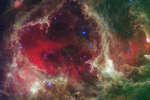
How do stars form? A study of star forming region W5 by the sun-orbiting Spitzer Space Telescope provides clear clues by recording that massive stars near the center of empty cavities are older than stars near the edges.
|
January February March April May June July August September October |
|||||||||||||||||||||||||||||||||||||||||||||||||