
|
You entered: Crescent Nebula
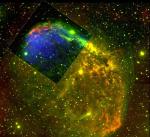 NGC 6888: X Rays in the Wind
16.10.2003
NGC 6888, also known as the Crescent Nebula, is a cosmic bubble of interstellar gas about 25 light-years across. Created by winds from the bright, massive star seen near the center of this composite image, the shocked filaments of gas glowing at optical wavelengths are represented in green and yellowish hues.
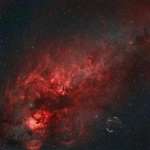 Nebulae in the Northern Cross
19.11.2010
Explore a beautiful and complex region of nebulae strewn along the plane of our Milky Way Galaxy in this widefield skyscape. The image emphasizes cosmic gas clouds in a 25 by 25 degree view centered on the Northern Cross, the famous asterism in the constellation Cygnus.
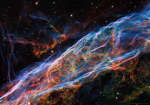 Veil Nebula: Wisps of an Exploded Star
5.04.2021
Wisps like this are all that remain visible of a Milky Way star. About 7,000 years ago that star exploded in a supernova leaving the Veil Nebula. At the time, the expanding cloud was likely as bright as a crescent Moon, remaining visible for weeks to people living at the dawn of recorded history.
 APOD: 2025 June 2 Б Veil Nebula: Wisps of an Ancient Supernova
2.06.2025
Wisps like this are all that remain visible of a Milky Way star. About 7,000 years ago that star exploded in a supernova, leaving the Veil Nebula. At the time, the expanding cloud was likely as bright as a crescent Moon, remaining visible for weeks to people living at the dawn of recorded history.
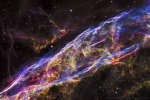 Veil Nebula: Wisps of an Exploded Star
19.09.2017
Wisps like this are all that remain visible of a Milky Way star. About 7,000 years ago that star exploded in a supernova leaving the Veil Nebula. At the time, the expanding cloud was likely as bright as a crescent Moon, remaining visible for weeks to people living at the dawn of recorded history.
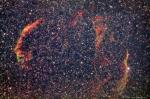 Wisps of the Veil Nebula
4.02.2003
These wisps of gas are all that remain visible of a Milky Way star. Many thousands of years ago that star exploded in a supernova leaving the Veil Nebula, pictured above. At the time...
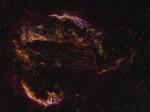 The Veil Nebula Unveiled
6.12.2005
These wisps of gas are all that remain visible of a Milky Way star. Many thousands of years ago that star exploded in a supernova leaving the Veil Nebula, pictured above. At the time...
 The Medusa Nebula
22.11.2024
Braided and serpentine filaments of glowing gas suggest this nebula's popular name, The Medusa Nebula. Also known as Abell 21, this Medusa is an old planetary nebula some 1,500 light-years away in the constellation Gemini. Like its mythological namesake, the nebula is associated with a dramatic transformation.
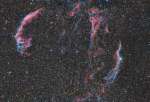 Wisps of the Veil Nebula
26.11.2012
Wisps like this are all that remain visible of a Milky Way star. About 9,000 years ago that star exploded in a supernova leaving the Veil Nebula, also known as the Cygnus Loop.
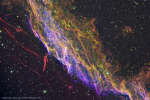 NGC 6992: Filaments of the Veil Nebula
1.12.2009
Wisps like this are all that remain visible of a Milky Way star. About 7,500 years ago that star exploded in a supernova leaving the Veil Nebula, also known as the Cygnus Loop.
|
January February March April May June July August September |
|||||||||||||||||||||||||||||||||||||||||||||||||