
|
You entered: Jupiter's Moons
 APOD: 2024 April 10 Б Planets Around a Total Eclipse
10.04.2024
What wonders appear when the Moon blocks the Sun? For many eager observers of MondayБs total eclipse of the Sun, the suddenly dark sky included the expected corona and two (perhaps surprise) planets: Venus and Jupiter.
 New Horizons
22.06.2015
In three weeks, the robotic New Horizons spacecraft will reach Pluto. As the featured video makes clear, though, humanity has been on an unprecedented epoch of robotic exploration of our Solar System's planets for the past half century.
 Planets Over Stonehenge
9.05.2002
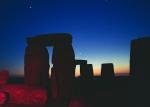
Stonehenge, four thousand year old monument to the Sun, provides an appropiate setting for this delightful snapshot of the Sun's children gathering in planet Earth's sky. While the massive stone structure dates from around 2000 B.C.
 Comet 46P Wirtanen
15.11.2018
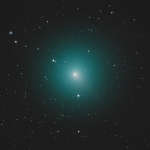
Periodic Comet 46P/Wirtanen is now the brightest comet in the night sky, but too faint to be seen by eye. From dark sky sites it could just become naked-eye visible though, as it's 5.4 year long looping orbit takes it closest to Earth and the Sun in mid December.
 Worlds of a Distant Sun: 47 Ursae Majoris b
5.10.1997
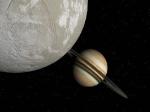
In the last few years, observational astronomy has given humanity evidence of the existence of worlds beyond the solar system. Solar-type stars are now inferred to harbor planets of approximately Jupiter mass - some residing in temperature zones which could conceivably support liquid water and therefore life!
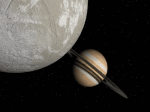 Worlds of a Distant Sun: 47 Ursae Majoris b
1.07.1996
Within the last few years, observational astronomy has given humanity evidence of the existence of worlds beyond the solar system. Indeed, solar-type stars are now inferred to harbor planets of approximately Jupiter mass - some residing in temperature zones which could conceivably support liquid water and therefore life!
 Asteroids
13.03.1998
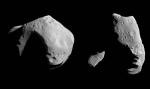
No asteroid or comet is known to be on a collision course with Earth. The asteroid designated 1997 XF11 had been predicted to come uncomfortably close, but new estimates place its passing beyond the orbit of the Moon. This earth-approaching asteroid was discovered by SpaceWatch astronomer Jim Scotti in December of last year.
 Betelgeuse Imagined
1.01.2020
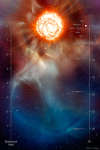
Why is Betelgeuse fading? No one knows. Betelgeuse, one of the brightest and most recognized stars in the night sky, is only half as bright as it used to be only five months ago.
 Introducing Comet ISON
1.10.2012
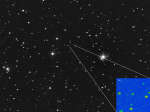
Could this dim spot brighten into one of the brightest comets ever? It's possible. Alternatively, the comet could break up when it gets closer to the Sun, or brighten much more modestly.
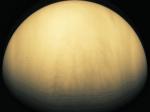 Venus: Earths Cloudy Twin
16.05.2004
This picture by the Galileo spacecraft shows just how cloudy Venus is. Venus is very similar to Earth in size and mass - and so is sometimes referred to as Earth's sister planet - but Venus has a quite different climate.
|
January February March April May June July August September |
|||||||||||||||||||||||||||||||||||||||||||||||||