
|
You entered: north star
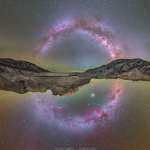 The Complete Galactic Plane: Up and Down
13.03.2018
Is it possible to capture the entire plane of our galaxy in a single image? Yes, but not in one exposure -- and it took some planning to do it in two. The top part of the featured image is the night sky above Lebanon, north of the equator, taken in 2017 June.
 Orion Dawn Over Mount Nemrut
16.12.2008
What's that in front of Orion? Forty kilometers north of Kahta, Turkey, lies Mount Nemrut, a mountain adorned with the fragments of vast statues built over 2000 years ago. The stone sculptures once...
 Tempel Tuttle: The Leonid Comet
16.11.2002
Star trails streak this composite time exposure of comet Tempel-Tuttle recorded by Tim Puckett on January 26, 1998. Then passing through the inner solar system on its 33 year orbit around the Sun, Tempel-Tuttle brightened unexpectedly, but binoculars or small telescopes were still required to visually observe it.
 Help Map The Moon
11.09.1998
You can help map the Moon. Early tomorrow morning (Saturday, September 12) the Moon will occult, or pass in front of, the bright star Aldebaran as viewed from some Southern and Eastern areas of the U.S. as well as regions in the Caribbean Sea, Nova Scotia, Newfoundland, Mexico, and Central America.
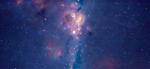 Journey to the Center of the Galaxy
21.01.1997
In Jules Verne's science fiction classic A Journey to the Center of the Earth, Professor Hardwigg and his fellow explorers encounter many strange and exciting wonders. What wonders lie at the center of our Galaxy?
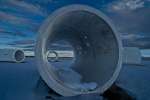 Through a Sun Tunnel
22.12.2011
Today the Sun stands still at 05:30 UT. Halting its steady march toward southern declinations and begining its annual journey north, the event is known as a solstice. In the northern hemisphere December's solstice marks the astronomical start of winter.
 APOD: 2023 July 30 Б Spiral Aurora over Icelandic Divide
30.07.2023
Admire the beauty but fear the beast. The beauty is the aurora overhead, here taking the form of a great green spiral, seen between picturesque clouds with the bright Moon to the side and stars in the background.
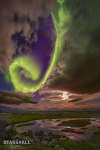 Spiral Aurora over Icelandic Divide
21.04.2019
Admire the beauty but fear the beast. The beauty is the aurora overhead, here taking the form of great green spiral, seen between picturesque clouds with the bright Moon to the side and stars in the background. The beast is the wave of charged particles that creates the aurora but might, one day, impair civilization.
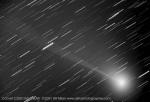 C 2001 A2 (LINEAR): Comet
5.07.2001
Comet C/2001 A2 (LINEAR) has crossed the celestial equator and is heading north. Outward bound, this primordial piece of the solar system is still just visible to the unaided eye and can now be sighted by northern hemisphere skygazers as it moves through the constellation Pisces.
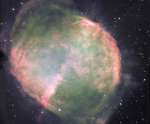 M27: Not A Comet
26.06.2008
Born on June 26th in 1730, astronomer Charles Messier scanned 18th century French skies for comets. To avoid confusion and aid his comet hunting, he diligently recorded this object as number 27 on his list of things which are definitely not comets.
|
January February March April May June July August |
||||||||||||||||||||||||||||||||||||||||||||||||||||||||