
|
You entered: lunar surface
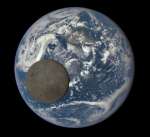 Full Earth, Full Moon
7.08.2015
The Moon was new on July 16. Its familiar nearside facing the surface of planet Earth was in shadow. But on that date a million miles away, the Deep Space Climate Observatory (DSCOVR) spacecraft's Earth Polychromatic Imaging Camera (EPIC) captured this view of an apparently Full Moon crossing in front of a Full Earth.
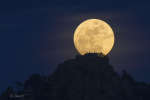 Find the Man in the Moon
12.06.2022
Have you ever seen the Man in the Moon? This common question plays on the ability of humans to see pareidolia -- imagining familiar icons where they don't actually exist. The textured surface...
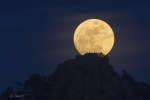 Find the Man in the Moon
1.02.2016
Have you ever seen the Man on the Moon? This common question plays on the ability of humans to see pareidolia -- imagining familiar icons where they don't actually exist. The textured surface...
 APOD: 2024 September 15 Б Find the Man in the Moon
15.09.2024
Have you ever seen the Man in the Moon? This common question plays on the ability of humans to see pareidolia -- imagining familiar icons where they don't actually exist. The textured surface...
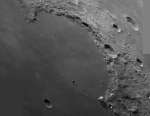 The Bay of Rainbows
8.02.2008
Dark, smooth regions that cover the Moon's familiar face are called by Latin names for oceans and seas. The naming convention is historical, though it may seem a little ironic to denizens...
 A Fleeting Eclipse
27.08.1997
A lunar eclipse can be viewed in a leisurely fashion. Visible to anyone on the night side of planet Earth (weather permitting), totality often lasts an hour or so as the moon glides through the Earth's shadow. But a solar eclipse is more fleeting.
 A Fleeting Eclipse
8.06.2002
A lunar eclipse can be viewed in a leisurely fashion. Visible to anyone on the night side of planet Earth (weather permitting), totality often lasts an hour or so as the moon glides through the Earth's shadow. But a solar eclipse is more fleeting.
 Mars Opposition
27.07.2018
Look opposite the Sun in the sky tonight and you'll see Mars at its brightest. Also within days of its closest approach Mars rises at sunset, near its brightest and best for telescopic observers too, except for the dust storm still blanketing the Red Planet.
 The Bay of Rainbows
12.02.2026
Dark, smooth regions that cover the Moon's familiar face are called by Latin names for oceans and seas. That naming convention is historical, though it may seem a little ironic to denizens...
 An Apollo 17 Panorama
28.01.2002
What would it be like to stand on the surface of another world, to look all around you, and to try to figure out how this world got there? To get an idea, scroll right. In 1972 during the Apollo 17 mission, astronauts Harrison Schmitt and Eugene Cernan found out first hand.
|
January February March April May June July August September |
|||||||||||||||||||||||||||||||||||||||||||||||||